


Commercial Grade Furniture Standards for Chairs, Desks, and Storage
ANSI/BIFMA standards give buyers a practical way to assess whether office seating has been tested for safety and performance. In the United States, these standards are voluntary unless a buyer or contract makes them a requirement, and commercial grade furniture durability standards should be matched to the product type. ANSI/BIFMA X5.1-2017 (R2022), for example, covers general-purpose office chairs, while ANSI/BIFMA X5.4-2020 (R2025) covers public and lounge seating.
A standards reference is a useful starting point, but it cannot predict exactly how furniture will perform in a particular workplace. This guide explains what seating tests cover, which standards apply to chairs, desks, storage, and workstations, and how to assess commercial-grade furniture durability standards beyond a broad “contract grade” label.
You’ll also learn how to review test claims and warranty terms, and why specifications should reflect how furniture will be used. These checks give you a more informed basis for selecting durable office furniture across a workspace.
Table of Contents
What Are The ANSI/BIFMA Seating Standards?
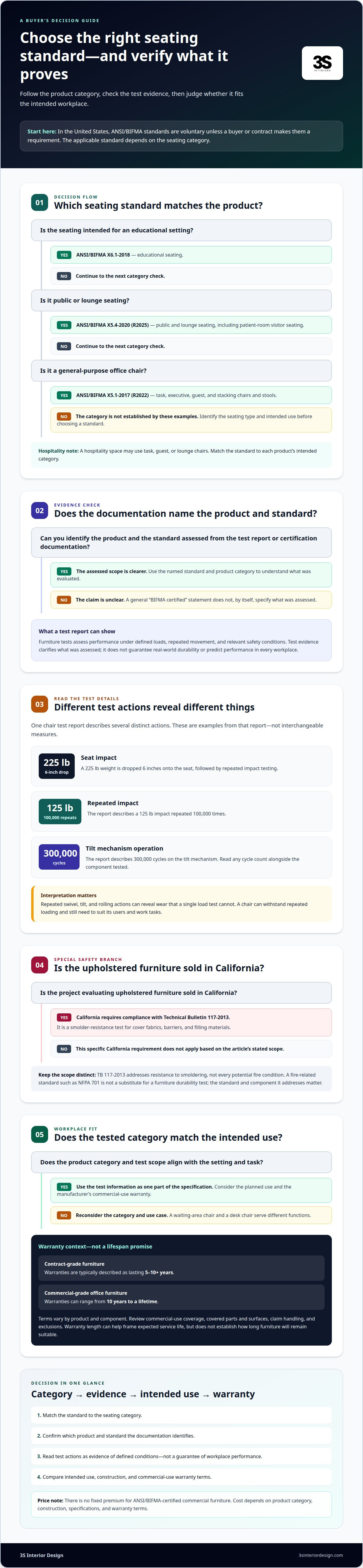
ANSI/BIFMA seating standards set out methods for evaluating furniture safety and performance. In the United States, BIFMA standards are voluntary unless a buyer or contract requires them. The applicable standard depends on the seating category, so a task chair and a reception chair may be assessed differently. Commercial-grade furniture durability standards help buyers specify products for defined uses instead of relying on a general “contract grade” label.
For schools, healthcare, and hospitality, request documentation showing which standard applies to each seating category. ANSI/BIFMA X6.1-2018 covers educational seating, while ANSI/BIFMA X5.4-2020 (R2025) covers public and lounge seating, including patient room visitor seating. Hospitality spaces may include several types, such as task, guest, or lounge chairs, so the relevant standard follows the product’s intended category. A certification or test report should identify the product and the standard assessed.
ANSI/BIFMA X5.1-2017 (R2022) covers general-purpose office chairs, including task, executive, guest, and stacking chairs and stools. Testing can help assess a chair’s safety and durability under specified conditions. Testing assesses structural performance under specified conditions, rather than reproducing every workplace’s daily use. Buyers should distinguish a claim that a chair was tested to X5.1 from a general statement that it is “BIFMA certified.” Test evidence clarifies what was assessed; it does not guarantee real-world durability.
Certification is one consideration in a commercial furniture purchase, not a substitute for a complete specification. Compare the standard and product category with the planned use, then review the manufacturer’s warranty for commercial-use coverage. Check which components and surfaces are covered, how claims are handled, and what exclusions apply. A warranty written for residential use may not address the demands of a shared office, school, or reception area.
Warranty length can help frame expected service life, but it is not the same as a lifespan promise. Contract-grade furniture warranties are typically described as lasting 5-10+ years; commercial-grade office furniture warranties can range from 10 years to a lifetime. Terms vary by product and component. For total cost of ownership, consider the purchase price alongside expected replacement, repair, and downtime needs. A longer warranty may reduce covered repair exposure, but it does not establish how long the furniture will remain suitable for the workplace.
How much more does ANSI/BIFMA-certified commercial furniture cost? There is no fixed premium: cost depends on the product category, construction, specifications, and warranty terms. Compare like-for-like products and consider documented testing and coverage instead of assuming certification alone determines the price.
Furniture safety, performance, and durability testing
Furniture tests assess how products perform under defined loads, repeated movement, and relevant safety conditions. For business and institutional settings, testing helps distinguish documented performance from general claims.
Office Chair Safety and Durability Tests
Office chair testing applies loads and repeated actions to assess structural performance and component function. For buyers, the test details show which stresses a chair was evaluated against, rather than promising identical results in every workplace. One chair test report describes a 225 lb weight dropped 6 inches onto the seat, followed by repeated impact testing.
That report also describes a 125 lb impact repeated 100,000 times and 300,000 cycles on the tilt mechanism. These examples illustrate different test actions: seat impact and tilt operation. They aren't interchangeable measures, so a cycle count should be read alongside the component tested. Repeated swivel, tilt, and rolling actions can reveal wear that a single load test cannot.
Comfort and safety are related, but they are not the same test outcome. A chair may withstand repeated loading and still need to suit its users and work tasks. In healthcare, a waiting-area chair serves a different function from a desk chair used for computer work. Match the tested product category to the actual setting and intended use.
California requires upholstered furniture sold in the state to meet Technical Bulletin 117-2013, a smolder-resistance test for cover fabrics, barriers, and filling materials. This addresses resistance to smoldering, not every potential fire condition. For a project involving upholstered chairs, the bulletin is a distinct consideration alongside structural and durability testing.
Fire-related specifications can vary by material and application. NFPA 701 is an example of a commercial safety standard buyers may encounter when evaluating furniture. It should not be treated as a substitute for a furniture durability test: the named standard and the product component it addresses matter. Residential furniture can also have different intended-use assumptions.
Risks of Durability Standard Failures
A durability failure occurs when furniture can no longer perform safely and functionally under its intended use. Common risks include loosened joints, unstable frames, worn mechanisms, and damaged upholstery. A damaged chair can interrupt work and require repair or replacement. In shared business and institutional spaces, frequent use can reveal weaknesses sooner.
When a chair’s tilt mechanism or seat structure fails, users may lose normal function or face an unstable seating surface. A failed upholstery component can also affect appearance and usability, while a mismatch with California’s TB 117-2013 requirement creates a separate compliance concern for upholstered furniture sold there. Test documentation helps clarify which risks a specific assessment addressed.
What are the Core Characteristics of Contract-Grade Furniture?
Contract-grade furniture is intended for commercial settings, where multiple users may rely on it in demanding environments. Compare construction, materials, and intended duty rather than relying on marketing labels alone.
Steel Gauge and Construction Differences
Steel gauge indicates material thickness, and commercial metal furniture is often made with 16 to 18 gauge steel, compared with 22 to 24 gauge in residential pieces. A lower gauge number means thicker steel. That distinction can matter for institutional environments where furniture faces repeated daily use. Gauge is only one construction detail, however; assess it alongside the product’s intended application and documented performance.
Contract-grade furniture can last 10+ years in service, while residential furniture typically has a 5-7 year lifespan. These are broad expectations, not a guarantee for an individual piece. The difference reflects the intended duty: commercial furniture is designed for continuous use by many people for 8+ hours a day. Residential furniture placed in an office may wear out much sooner than furniture designed for daily workplace use.
Evaluate construction across the complete product, rather than inferring quality from a single material specification. For desks, consider how the frame, work surface, and support structure work together. For chairs, assess the frame alongside moving components and upholstery. A thicker steel specification alone does not establish that every component suits a particular workplace or use pattern.
Frame Strength and Durability Features
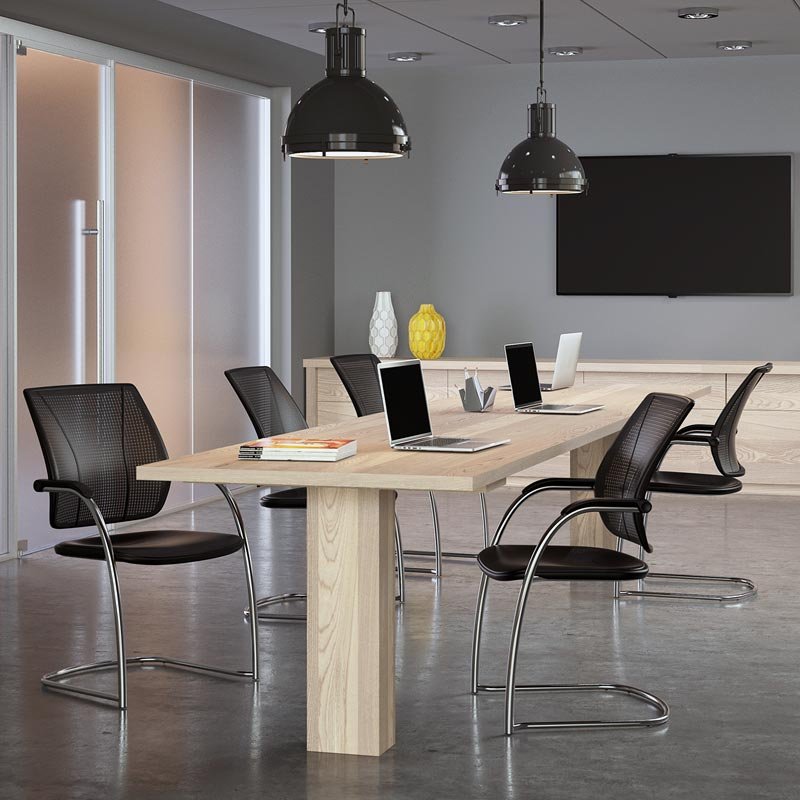
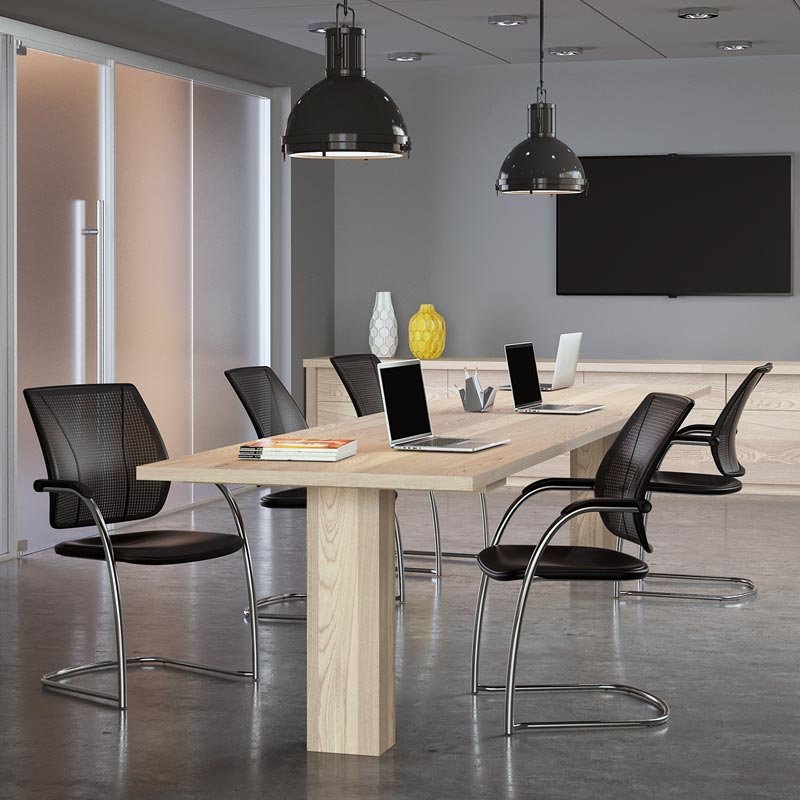
Frame strength describes how structural components support a piece during its intended use. The frame carries loads and connects the product’s main components. For example, a conference table used daily faces different demands from one used occasionally in a home. Use the product category, stated duty, and relevant performance documentation together as a benchmark.
Contract-grade furniture is often rated to support 350-500+ lbs or more, compared with approximately 200-250 lbs for residential furniture. These figures describe broad rating ranges, not a universal specification for every chair or table. Match the stated capacity to the product and its intended users. Don’t assume a broad “commercial” label establishes the rating for every piece.
Durability also depends on how the full assembly performs in its working environment. A desk frame, chair base, and storage unit each have distinct structural roles. Assess every piece against its function, use pattern, and relevant performance standard. This separates construction evidence from marketing language and helps create consistent specifications across the workplace.
BIFMA standards for office chairs, desks, storage, and seating
BIFMA standards address commercial furniture performance, safety testing, and sustainability. The relevant standard depends on the product category and the performance claim being evaluated.
ANSI and BIFMA Roles
ANSI and BIFMA have distinct roles in commercial furniture standards: BIFMA develops furniture-focused standards, while ANSI approves standards through its national standards process. This distinction helps buyers interpret an ANSI/BIFMA designation correctly. BIFMA has represented the furniture industry since 1973, and the designation identifies a standard developed for a defined furniture category, not a universal rating for every product.
Standards by Furniture Type
Furniture standards are category-specific, so match the standard identifier to the item under consideration. ANSI/BIFMA X5.5-2021 covers desks and table products, including height-adjustable tables. ANSI/BIFMA X5.9-2019 covers freestanding, mobile, and wall-mounted storage units. For workstation panels, screens, and hang-on components, ANSI/BIFMA X5.6-2016 (R2021) applies.
These distinctions matter when a contract covers several product types. A desk test standard does not establish test coverage for storage or workstation panels. Specify each product category separately so purchasing requirements match the intended furniture.
Compliance Claims and Certification
A BIFMA compliance claim should identify the tested product and the applicable standard. BIFMA Compliant products are tested in an ISO 17025 accredited lab, and their test reports face random annual audits by BIFMA. For purchasing records, match the model and standard edition in the compliance documentation to the item being specified. A broad “BIFMA compliant” statement alone gives less detail about coverage.
Certification and sustainability claims are separate. ANSI/BIFMA e3-2024 provides sustainability criteria for products seeking LEVEL certification. A sustainability rating therefore doesn’t replace product performance testing; it addresses a different set of criteria.
Comparing Furniture Standards and Materials
Furniture standards can address different aspects of performance, so buyers should check what each cited standard covers. ISO 17025, by contrast, relates to laboratory accreditation in the BIFMA compliance context, not a furniture product standard. These names aren’t interchangeable; the cited document and its scope determine what was assessed.
For upholstered furniture fabrics, California Technical Bulletin 117-2013 addresses smolder resistance for cover fabrics, barriers, and filling materials. NFPA 701 is another commercial safety standard buyers may encounter. These references address fire-related considerations, not general wear testing for every fabric or finish. The applicable requirement depends on the material and its intended use, so don’t treat one fire-safety reference as proof of all-around durability.
Checklist for identifying commercial-grade office furniture
Review each furniture category consistently. Chairs, desks, storage units, and workstation panels require different performance references, so a general “commercial” label cannot establish suitability for every use.
Match the standard to the product. For general-purpose office chairs, look for ANSI/BIFMA X5.1-2017 (R2022). Desks and height-adjustable tables fall under ANSI/BIFMA X5.5-2021, while storage units fall under ANSI/BIFMA X5.9-2019.
Connect specifications to purpose. Identify whether the piece serves a private office, shared workstation, reception area, or conference room. Intended use helps determine which standard and performance details matter for that application.
Review the test evidence. A useful compliance claim identifies the product and applicable standard. For example, a BIFMA claim should distinguish a tested office chair from a general statement about a furniture range.
Read warranty terms alongside testing. Confirm the warranty’s commercial-use coverage and review its terms for components and surfaces. Contract-grade warranties are typically described as lasting 5-10+ years, but coverage details vary.
Assess construction by category. For metal furniture, commercial pieces often use 16 to 18 gauge steel. Treat gauge as one specification, not proof that the complete product meets every workplace requirement.
Include fabrics and fire considerations. For upholstered furniture sold in California, Technical Bulletin 117-2013 addresses smolder resistance for cover fabrics, barriers, and filling materials. It does not establish general wear performance.
Separate durability from sustainability. ANSI/BIFMA e3-2024 provides sustainability criteria for products seeking LEVEL certification. That assessment serves a different purpose from product durability testing.
Weigh the evidence against the operating environment and budget. A shared office chair used throughout the workday faces different demands from a guest chair used occasionally. A conference table should suit its planned setting and use, while storage should match how the space will be organized. These comparisons help keep specifications grounded in practical needs rather than appearance or marketing language.
Keep a consistent record for each product group: note the item’s purpose, relevant standard, test evidence, warranty coverage, and material details. If a contract specifies a standard, align each applicable item with that requirement. This makes gaps easier to spot before procurement and supports reliable comparisons between office furniture options.
For help coordinating specifications across seating, tables, and workplace layouts, plan a standards-informed furniture project.
3S Interior Design: Sit/Stand & Height-Adjustable Tables
3S Interior Design helps businesses select and coordinate Sit/Stand & Height-Adjustable Tables as part of a functional office plan. This is a practical next step when you’re translating furniture standards into specifications for a new workspace or an office update. The team also supplies Private Office Desks & Casegoods, Ergonomic Office Seating, and Workstations & Cubicles.
A project can include consultation, space planning, product selection, procurement, delivery, and professional installation. Coordinating these stages helps align furniture choices with the intended layout and daily use. When a project includes several product categories, this process connects individual specifications to the overall workspace plan.
Contact 3S Interior Design to discuss your commercial office furniture project.
Put Your Furniture Plan Into Practice
A furniture specification is more useful when it reflects how people work and the layout they use. Apply commercial-grade furniture durability standards as part of the planning process, alongside intended use, product category, and coordination across the workspace. This gives decision-makers a clear path from requirements to a cohesive project plan.
3S Interior Design offers Private Office Desks & Casegoods, Ergonomic Office Seating, and Workstations & Cubicles for business workspaces. Bringing these categories into the same planning discussion can help align furniture selection with the space’s operational needs. The next step is to define the project scope and identify which furniture categories need to be coordinated.
Contact 3S Interior Design to discuss your office furniture plans. A well-defined scope creates a practical starting point for the decisions ahead.
Frequently Asked Questions
What do BIFMA tests simulate?
BIFMA tests simulate defined loads and repeated furniture actions, such as sitting, swiveling, tilting, or rolling an office chair. Each test focuses on particular components and performance conditions, rather than reproducing every workplace variable. Shared seating, for example, may experience different use patterns from a chair assigned to one person. Test results describe how a product performed under the specified procedure; they do not predict an exact service life.
What does “commercial grade” actually mean?
“Commercial grade” generally describes furniture intended for business or institutional use, but the label does not indicate a universal performance level. Consider the exact product category, applicable test standard, intended use, and warranty terms together. An office chair in a shared workspace, for example, needs specifications suited to that setting. Without product-specific evidence, a commercial label says little about tested performance.
BIFMA compliant vs BIFMA certified: what is the difference?
“BIFMA compliant” usually refers to a product tested against an identified BIFMA standard, while “certified” should identify the certification program and its scope. BIFMA Compliant products are tested in ISO 17025 accredited labs, and their reports face random annual audits by BIFMA. Treat the terms as different claims, not synonyms. Match the claim to the product model, standard, and supporting documentation.
Does BIFMA compliance mean a chair is ergonomic?
No. BIFMA compliance indicates that a product was assessed against a named standard; it doesn’t by itself establish that a chair suits every user or workstation. Ergonomic fit depends on the person, task, and chair adjustments. For computer work, BIFMA X10.1-2024 addresses ergonomic dimensions for furniture used at computers. That reference concerns dimensions, while a chair’s compliance claim concerns the stated test scope.
Does a BIFMA test report expire?
A report documents a product’s assessment against a particular standard and version; it does not establish a universal expiry date. Its relevance may change if the product design changes or the standard is revised. BIFMA’s recommended RFP language accepts a prior standard version when the current version is less than three years old. That procurement guidance is not a universal expiration rule for every test report.
Is BIFMA compliance legally required?
BIFMA standards are voluntary in the United States unless a buyer or contract makes them a requirement. A purchasing specification can therefore make compliance a condition for a project, even when no general requirement applies. Check the contract language and the product categories it covers. For upholstered furniture sold in California, Technical Bulletin 117-2013 is a separate state requirement addressing smolder resistance.
Is residential furniture ever fine for an office?
Residential furniture may suit an office with light, limited use, but its intended duty and warranty terms still matter. A chair in a private room used occasionally has a different workload from shared seating in a busy reception area. For home workspaces or private offices where heavy commercial wear is not an issue, artisanal furnishings from Urban Reclamation can introduce warmth and character, but standard residential furniture placed in a high-traffic office typically wears out much sooner than furniture designed for daily commercial use. Match the choice to expected use, user volume, and replacement planning.
What are the main commercial furniture durability standards in the United States?
Key references include ANSI/BIFMA standards for chairs, desks, storage, and panel systems, plus ASTM as another commercial furniture standard. Examples include X5.1 for general-purpose office chairs, X5.5 for desks and tables, and X5.9 for storage. California’s TB 117-2013 addresses upholstered-furniture smolder resistance. For commercial projects in Los Angeles, Santa Monica, Encino, Burbank, Beverly Hills, Century City, Culver City, Brentwood, Compton, Long Beach, Carson, Thousand Oaks, Westlake Village, Pomona, Irvine, Valencia, and Sherman Oaks, match standards to each product category.
Comments