


Office Furniture Leasing vs Buying: Compare Costs and Ownership
Leasing can preserve cash upfront, while buying may cost less over time if furniture will remain in use for years. A sound office furniture leasing vs buying analysis compares total payments, depreciation, ownership, care responsibilities, and the business’s expected needs. Leasing means paying to use furniture for a set term while the lessor retains ownership; buying makes the furniture a company asset.
It is reasonable to focus on the initial outlay: buying ties up more capital, while leasing spreads payments across the contract term. But that is only part of the decision. Lease payments do not build ownership, and an agreement may limit modifications or early exit. Buying gives the business more control, along with responsibility for managing the assets as needs change.
This office furniture leasing vs buying analysis compares how each option affects costs, depreciation, ownership, and care responsibilities. It also explains how growth plans and expected time in a workspace can guide the choice, including when a mixed approach may suit a business better than using one method for every furniture need.
Table of Contents
Office furniture purchase costs and ownership
Buying requires an upfront capital outlay; a standard lease spreads payments over a set term. Compare total cost, ownership, and cash-flow effects before choosing either option.
Upfront Purchase Costs and Cash Reserves
A purchase concentrates spending at the start, which can reduce cash reserves available for other operating needs. Buying furniture usually requires a 30% production deposit, so include that payment in the cash-flow plan before committing. The remaining purchase costs and payment timing depend on the order terms. Unlike a standard lease, buying converts the purchase into a company asset rather than a continuing fee for use.
Short-Term and Long-Term Financing Costs
Financing a purchase divides the upfront cost into payments, with interest adding to the amount paid over time. One example in this analysis uses a 6% annual loan interest rate; the financing period affects total interest. A standard lease instead sets payments for use during the contract, without transferring ownership. Lease-to-own combines scheduled use payments with a potential path to ownership, so its final cost depends on the contract’s payment and transfer terms.
Financing and lease-to-own arrangements spread cash requirements differently from standard leases. Financing supports a purchase and eventual ownership, while a standard lease pays for use. Lease-to-own links payments to a potential transfer of ownership under the agreement.
Buying Versus Leasing Long-Term Costs
In the United States, typical costs depend on furniture quantities, specifications, payment terms, financing, and the period of use. A purchase creates an initial outlay, while a lease generally creates recurring payments; compare their totals over the same period. A 50-employee example estimates furniture rental at about 3% of furniture value per month. Treat that as an example, not a quote for a particular order.
With longer use, buying can avoid repeated lease fees, while leasing can preserve cash upfront. Compare the purchase total, financing interest, lease payments, and any value remaining at the end of the period. The table summarizes how each option affects the main cost and ownership criteria.
Reduce purchase costs by prioritizing essential furniture, matching quantities to confirmed workspace needs, and avoiding specifications beyond operational requirements. For example, phase an order if departments are opening at different times instead of purchasing every workstation immediately. This can preserve cash reserves without making low initial spending the only measure of value.
Choose by comparing the expected use period and available cash flow with total payments, financing costs, and ownership needs.
Furniture depreciation
Depreciation spreads the recorded cost of purchased furniture over time instead of treating the full purchase as an immediate expense. The schedule affects reported profit and the timing of potential tax benefits.
Depreciation of Purchased Furniture
In Germany, the purchase value and independent usability determine how office furniture is depreciated. Furniture below €800 excluding VAT can be fully depreciated in the purchase year. Independently usable assets costing less than €1000 can be depreciated over 5 years as a collective item. Furniture with acquisition costs over €1000 is depreciated according to the AfA table over 13 years.
These German thresholds differ from the general US timeline in the research facts. In the United States, office furniture purchases are usually depreciated over five to seven years under IRS guidelines. That treatment applies to purchased assets, so a lease payment does not create depreciation for the lessee when the lessor owns the furniture.
For an office buying desks, seating, or storage, start by recording each asset’s cost, identifying the applicable depreciation schedule, and applying it consistently. A furniture purchase is capital, and depreciation changes its reported value over time. The method and timing can affect financial statements even while the furniture remains in daily use.
Section 179 may also affect qualifying purchases: qualifying office furniture purchases may be eligible for accelerated depreciation under Section 179. This is distinct from the standard depreciation schedule because it may allow faster recognition of eligible costs. Eligibility and tax treatment depend on the applicable rules and the asset details.
Tax Savings from Depreciation
Depreciation can reduce taxable income by recognizing an asset’s cost over time. Deductions follow different schedules, so their timing changes the annual tax effect.
A deduction is not cash received; it changes taxable income. Businesses should distinguish this timing effect from the original cash commitment to buy furniture.
Lease prices can differ by contract and location, while sales-tax treatment can vary by state in the United States. The transaction structure and applicable state rules affect tax treatment, so lease payments and furniture purchases may not be treated identically.
For a leasing-versus-buying decision, compare the cash outlay with the timing of depreciation benefits. A purchase creates an owned asset and a depreciation schedule; a lease creates contractual payments instead. This distinction clarifies how each option affects capital, reported expenses, and tax planning.
Furniture ownership and business assets
Ownership determines who controls the furniture, records its value, and decides what happens when a workspace changes. Compare the lease contract and purchase plan over the full period of use.
Ownership Through Leasing and Purchasing
With a purchase, the company owns the furniture and can decide whether to keep, modify, or resell it. Under a lease, the lessor retains ownership; the business typically cares for the furniture and returns it when the contract ends. This affects control of the assets and decisions about relocation, reconfiguration, and disposal.
For example, a company that owns conference tables can adapt the setup without lease-related constraints. A leased setup remains subject to contract terms, including limits on modifications or early exit. Ownership is more than an accounting entry: it determines who controls the furniture during a move or operational change.
Residual Value of Furniture
Residual value is the amount furniture may retain after its service period. Factory-grade office furniture is described as lasting 5-10 years, while factory desks with 25 mm tops and steel frames typically retain 40-60% of purchase value after three to five years. These figures illustrate why retained value can change the effective cost of an owned investment.
Resale value depends on condition, fit, and whether furniture can be reused elsewhere. Systems furniture can lose value through removal costs, installation requirements, and customization for its original location. Removal and reassignment costs can reduce residual value to $0 after 60 months in many industries. A resale estimate should therefore account for relocation, not just physical condition.
Long-Term Savings and Total Cost
Over five years, buying office furniture is estimated to be 50-70% cheaper than renting when volume and specifications match. These comparisons depend on the same furniture scope and use period.
Residual value matters because ownership leaves the company with an asset, while lease payments do not build ownership. Compare the estimated purchase cost and likely retained value with every lease payment across the five-year period.
A useful total-cost review separates purchase outlay, ongoing lease payments, and end-of-use value. For owned furniture, include its likely remaining value and the cost of moving or reassigning it. For leased furniture, include the contract’s full payments and return obligations. A well-maintained furniture asset can last for 15 years, so a five-year comparison may not capture its full service period.
Buying can suit stable, long-term use when a business expects to keep furniture beyond five years. Leasing may fit a shorter commitment or a workspace with uncertain future needs. For a mixed plan, a business with steady growth might buy core furniture and lease additions for temporary departments or expansions.
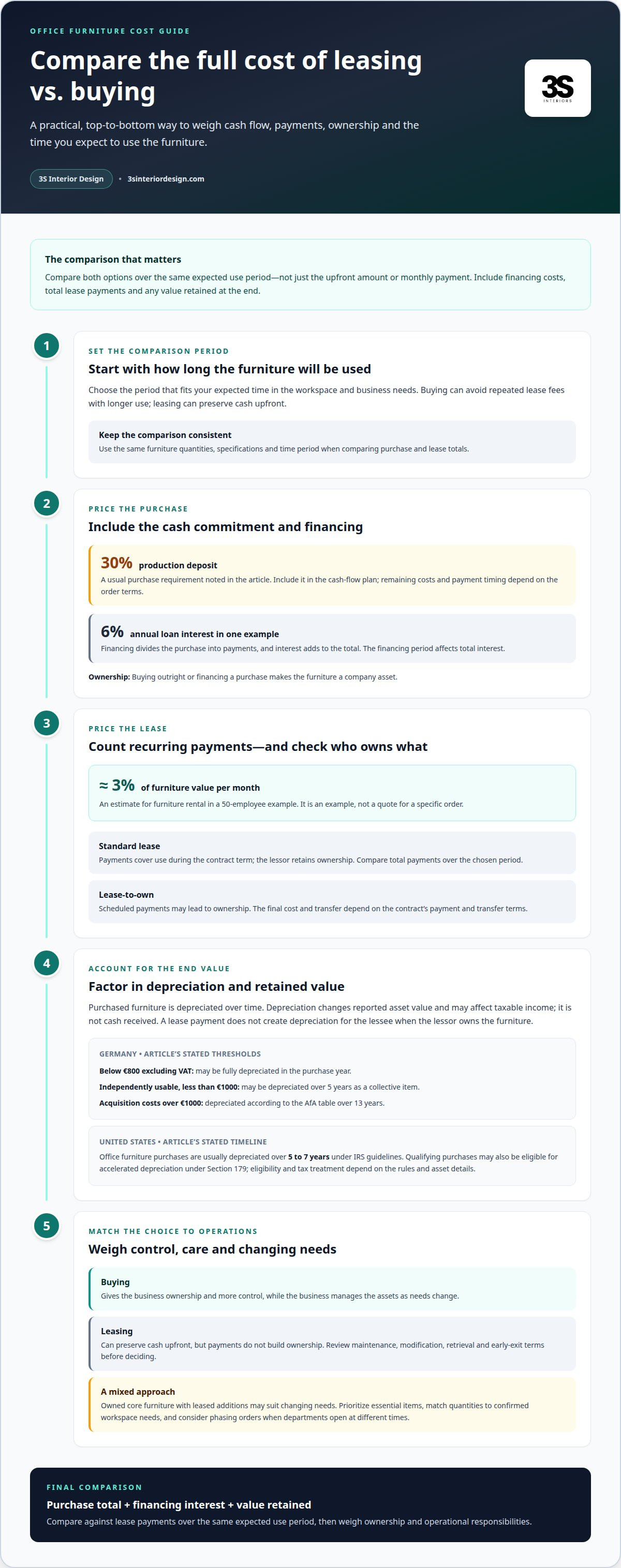
Rental flexibility and service responsibilities
Leasing can make furniture adjustments easier as an organization changes, but contract terms determine how flexible the arrangement is. Review modification, maintenance, and return requirements before treating monthly payments as a short-term commitment.
Flexibility for Organizational Changes
Leasing may suit a temporary expansion or a department whose workspace needs could change. A lease can also restrict modifications or early exit, so flexibility depends on the agreement, not simply on monthly payments. For example, a growing team may need more desks, while a relocation could make the layout unsuitable before the contract ends.
Renting can let a business add products and return furniture it no longer needs at short notice. That differs from a multi-year lease, where early termination is usually unavailable and exiting can involve high additional costs.
Flexibility for Staffing Changes
Staffing changes affect how many workstations a business needs and how quickly it needs them. Renting can help a company respond to a short-term increase by adding furniture, then returning it when the need ends. A fixed-term lease may offer less flexibility if headcount falls before the agreement expires.
For an expected contract ending within 6-24 months, renting is recommended in the research facts. For longer staffing plans, compare the term against expected space needs and the cost of unused furniture. Owned furniture can also be difficult to adapt when organizational needs change.
Lease Upgrades and Service Responsibilities
Leasing can make periodic furniture refreshes easier, which may suit a business seeking regular updates. The lessor retains ownership, while the lessee is usually responsible for care and maintenance and must return the furniture when the contract ends. In some rental arrangements, the landlord may handle repairs and maintenance during the rental period.
Responsibilities vary by arrangement. Before signing, identify who handles repairs, what qualifies as acceptable condition, and how upgrades or substitutions affect the agreement. A company planning a layout change should also account for restrictions on modifying leased furniture.
Lease Fees and Early Termination Risks
Office furniture leases do not have a single fee structure. The contract sets payment timing and terms, including any deposit, maintenance allocation, return conditions, and end-of-lease charges. Read these provisions together: a low monthly payment does not reveal the full cost if additional obligations apply at return.
Lease risks include restricted modifications and limited early-exit options. Early termination is usually unavailable, and exiting can be complicated and involve high additional costs. Damage penalties depend on the contract’s return conditions, making care and maintenance responsibilities important.
For a short project expected to end within 6-24 months, renting may align better with the timeline. For a multi-year arrangement, weigh the value of periodic upgrades against contract limits and return obligations. A staffing increase that becomes permanent may call for a different plan than a temporary expansion, so match the furniture commitment to the expected duration of the change.
Business growth and furniture decisions
Furniture decisions should reflect expected growth, financial health, and workspace plans. The advantages of leasing for a startup may differ from those for a stable business planning long-term use.
Advantages of Leasing for Growing Businesses
Leasing requires a smaller upfront commitment than buying, which can help startups preserve cash for other expenses. It may also suit a business expecting rapid growth, temporary expansion, or changing space needs. A company opening a new department can lease furniture instead of funding every item as a purchase.
Scheduled lease payments can simplify financial projections by spreading expenses across the agreement. This predictability can support planning when revenue and staffing are changing. Renting also lets a business add furniture and return items it no longer needs, which may suit a temporary team expansion better than owning excess assets.
Drawbacks of Leasing for Growing Businesses
Lease payments do not build furniture ownership, and leasing can cost more than buying outright over a long period. A growing company may also outgrow a fixed arrangement. If headcount changes or teams reorganize before the contract ends, lease terms may limit modifications or early exit.
Those constraints matter when a startup’s growth forecast is uncertain. Leasing can reduce the initial cash commitment, but the business still takes on scheduled expenses and return responsibilities. A company expecting stable staffing and long-term use may prefer the control and asset ownership of a purchase.
For startups and growing businesses, leasing can preserve cash and support temporary needs, while buying can build ownership and avoid ongoing lease fees. The trade-off is flexibility versus long-term cost and control. Leasing can suit short-term expansion; buying may suit furniture intended to stay in use as the organization grows.
Use a staged decision instead of treating every furniture need alike. First, separate core furniture from items needed only during expansion. Then compare how long each group is expected to serve the business, how much upfront capital is available, and whether staffing plans are stable. Buying may suit core work areas intended for long-term use, while leasing may suit temporary additions.
For example, a company adding a department while testing a new operating model could lease a temporary setup, then buy core furniture once its space needs settle. A business with stable headcount and strong financials may instead buy furniture outright. The best fit depends on financial health, anticipated growth, and design aspirations.
Build the comparison around three practical outcomes: available cash after the commitment, total expenses across the expected use period, and the ability to adapt the workspace. If one furniture plan cannot meet all three, divide the decision by use case. Plan furniture for your growth needs as part of a workspace strategy.
3S Interior Design
3S Interior Design helps businesses translate furniture decisions into a coordinated workspace plan. Its team manages consultation, space planning, product selection, procurement, delivery, and professional installation. This support is useful when comparing a long-term purchase with furniture needs tied to growth, relocation, or changing team layouts.
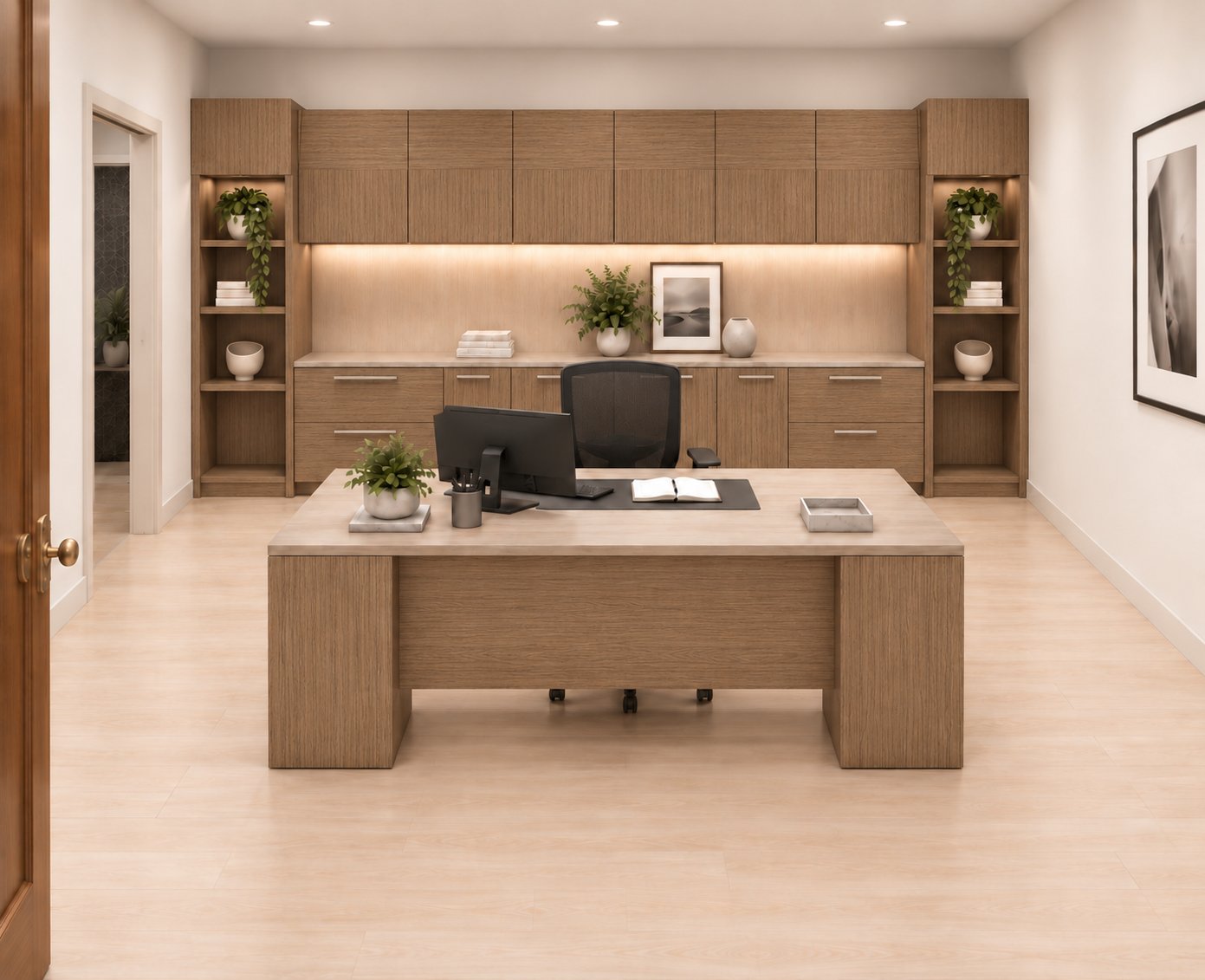
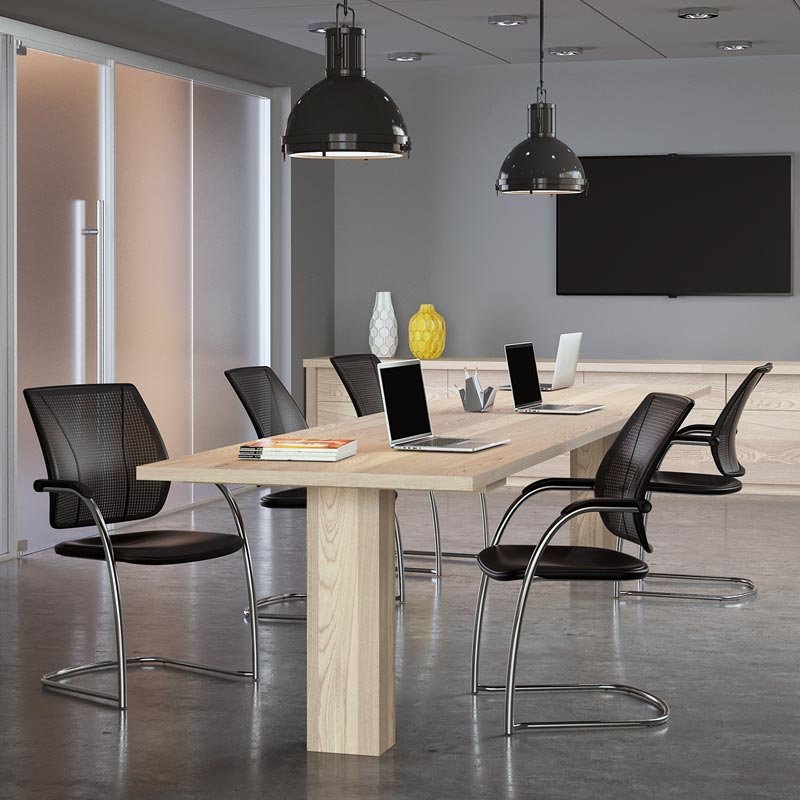
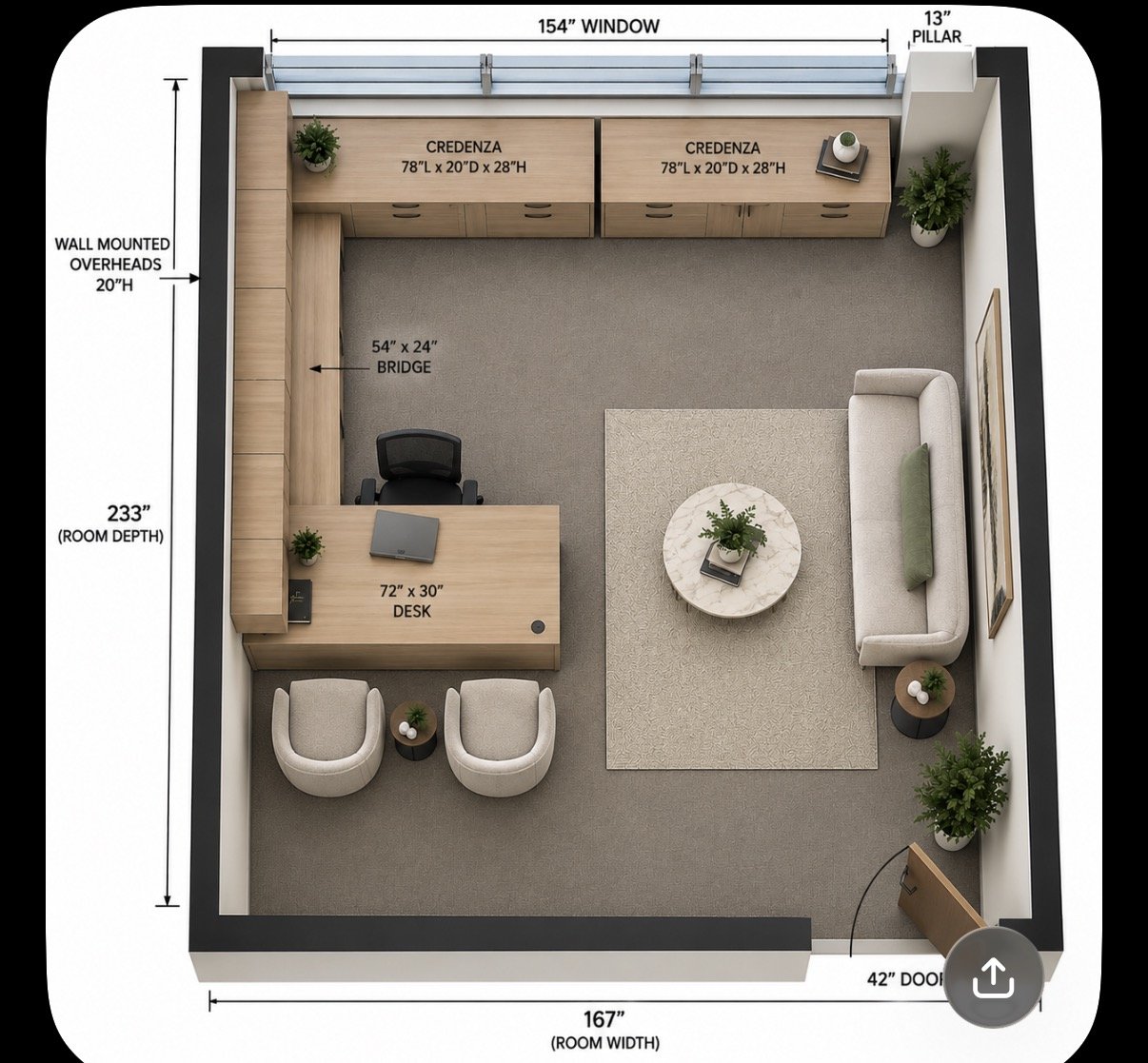
Space planning can define the furniture quantities and layout needed for a purchase plan. Private office desks and casegoods, ergonomic seating, workstations, and conference room furniture can then be selected for the planned workspace. Clear project requirements connect the ownership decision to practical operational needs.
For a commercial office furniture project, contact 3S Interior Design to discuss your workspace requirements.
Set a Furniture Decision That Can Adapt
Before approving a furniture commitment, assign responsibility for tracking its assumptions. The facilities lead can document the planned workspace, while finance records the expected cash commitment and ownership treatment. Keep these inputs together so a change in staffing, location, or operating plans prompts a deliberate review rather than an unplanned furniture decision.
A useful office furniture leasing vs buying analysis should support the business’s next operational step, not just settle the current order. Treat the decision as part of workspace planning, and revisit it when the business model or space requirements materially change. This gives decision-makers a consistent basis for aligning furniture choices with business priorities.
3S Interior Design can help translate workspace requirements into a coordinated furniture plan. Discuss your office furniture project with 3S Interior Design and move forward with a plan suited to your operational needs.
Frequently Asked Questions
What does it mean to lease capital assets?
Leasing capital assets means paying to use business property for an agreed term instead of buying it upfront. For office furniture, the lessor generally retains ownership while the business makes scheduled payments and follows contract conditions. For example, a company opening a temporary project area could lease desks for that workspace. The agreement determines the use period, payment schedule, maintenance duties, and what happens when the term ends.
How do office furniture lease payments compare with the upfront purchase cost over 3, 5, and 10 years?
Compare the total lease payments with the purchase cost over matching 3, 5, and 10-year periods. For each horizon, add every scheduled payment and contract charge; for buying, include acquisition and financing costs, then subtract estimated residual value. Use the same furniture quantity and specifications in both scenarios. A shorter comparison may favor preserving cash, while a long-term office furniture leasing vs buying analysis can reveal the effect of repeated lease payments.
What are the tax implications of leasing versus buying office furniture for a U.S. business?
Lease payments are typically deductible in the year incurred when the business does not become the furniture’s beneficial owner. Purchased furniture is generally depreciated over time, and qualifying purchases may be eligible for accelerated depreciation under Section 179. Tax treatment and financial reporting are distinct: under ASC Topic 842, lease classification depends on factors such as term, ownership transfer, payment value, and asset specialization.
Can businesses deduct office furniture lease payments or depreciate purchased furniture?
Yes. Lease payments are typically deducted as operating expenses in the period incurred when the lessee does not become the beneficial owner. Purchased office furniture is depreciated instead, usually over five to seven years under IRS guidelines. For example, a client working with 3S Interior Design buying desks records the asset and applies depreciation over its applicable schedule. Section 179 may allow accelerated depreciation for qualifying purchases, changing the timing of deductions.
When is buying office furniture more cost-effective than leasing?
Buying is generally more cost-effective when furniture will remain in use for five years or more, specifications stay stable, and the business can fund the purchase. The comparison improves when furniture retains resale or reuse value. A company planning a permanent office layout may benefit from ownership, while one facing a temporary expansion may value a shorter commitment more than long-term savings.
How can a business calculate the total cost of ownership for leased versus purchased office furniture?
Use the same furniture scope and review period for both options. For leasing, total scheduled payments, contract charges, maintenance responsibilities, and return costs. For buying, add the purchase price, financing interest, maintenance, and relocation or removal costs, then subtract expected residual value. Record tax deductions separately from cash expenses. For any standard corporate workspace, include planned layout changes so the comparison reflects likely use, not just the initial setup.
Comments