


2026 Southern California Executive Chair Procurement Guide
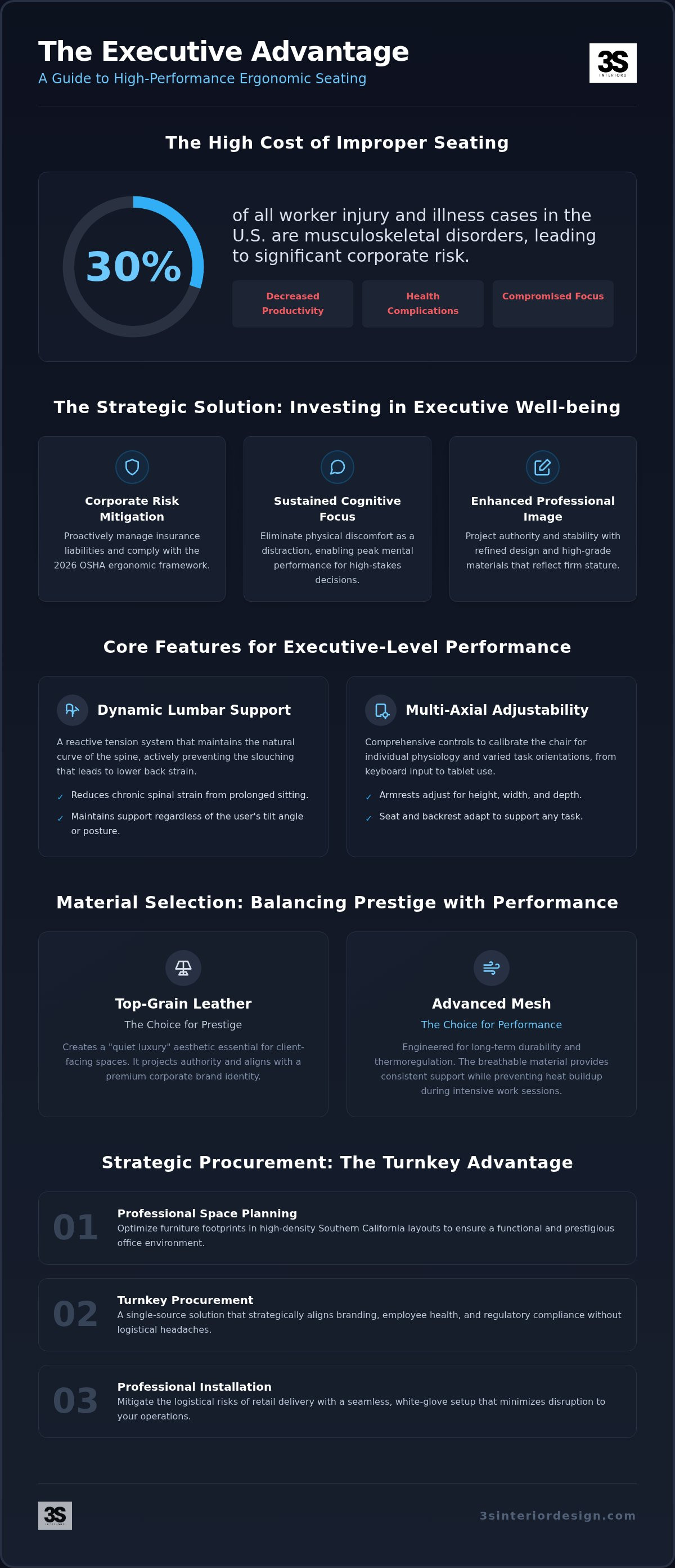
Musculoskeletal disorders account for nearly 30% of all worker injury and illness cases in the U.S., making the selection of high-performance executive ergonomic office chairs a critical priority for corporate risk mitigation. This statistic underscores the high cost of improper seating, which often leads to decreased leadership productivity and long-term health complications for your most valuable talent.
You likely recognize the tension between maintaining a prestigious office environment and addressing the persistent back pain complaints that disrupt the workday. Procuring professional seating involves more than a simple furniture purchase; it requires a strategic alignment of corporate branding, employee health, and strict regulatory compliance. It's common for decision-makers to struggle with mismatched office aesthetics or the logistical headaches of managing complex deliveries and assembly.
This guide outlines how to select seating that meets the mandatory 2026 OSHA ergonomic framework while maintaining the "quiet luxury" aesthetic preferred in business hubs like Century City and Irvine. We'll detail the technical specifications of premium seating, the strategic benefits of turnkey project management, and the specific logistical steps necessary for a seamless installation. You'll discover how to secure a cohesive office design that supports both your leadership's physical well-being and your firm's professional image.
Table of Contents
The Role of Executive Ergonomic Seating in Professional Environments
High-level leadership requires sustained concentration over extended periods. An executive chair serves as a functional tool for high-stakes decision-making rather than a mere decorative element. The Role of Executive Ergonomic Seating has evolved to address the specific physiological demands of leadership roles where desk time translates to high-pressure strategy sessions. Standard task chairs frequently lack the structural integrity and advanced calibration needed for these environments. They fail to support the varied postures an executive adopts during a standard ten-hour day, often leading to physical fatigue that compromises mental clarity.
Investing in high-performance executive ergonomic office chairs ensures that physical discomfort does not disrupt cognitive performance. When the body is properly aligned, the brain can dedicate more resources to complex problem-solving. Poor seating creates micro-distractions through localized pain, which leads to mental exhaustion. Standard office furniture often uses lower-density foams that degrade quickly under constant use. In contrast, executive-grade models utilize high-specification membranes and structural components that maintain their ergonomic profile for years, ensuring that the seating remains a reliable asset for the firm.
Health ROI: Mitigating Long-Term Professional Risks
Musculoskeletal disorders account for nearly 30% of all worker injury and illness cases in the U.S., according to July 2026 data from MASOF. For executives, these risks are amplified by the length of their sessions in the boardroom or private office. High-quality executive ergonomic office chairs provide dynamic support that adjusts to movement, reducing the risk of chronic spinal strain. This investment lowers the probability of executive absenteeism and improves long-term retention of key talent. From a logistical standpoint, providing superior seating is a proactive measure to manage corporate insurance liabilities and maintain operational stability within the leadership tier.
Aesthetics and Brand Identity in the Private Office
The visual impact of an office influences client perceptions and sets the tone for critical negotiations. A well-selected chair projects authority and stability through refined design and high-grade material quality. It's essential to integrate these seating choices into a comprehensive private office desks and casegoods strategy to ensure a cohesive professional environment. In Beverly Hills or Century City, where client-facing spaces are critical, the furniture must reflect the firm's stature. The psychology of seating in high-level meetings establishes a sense of permanence and professional standards. During negotiations, a chair that provides stability and a commanding presence helps maintain a confident posture, reinforcing the executive's position of authority.
Essential Ergonomic Features for Executive-Level Performance
Selecting executive ergonomic office chairs requires a technical understanding of how furniture supports physiological performance during long-term sedentary work. Adhering to Essential Ergonomic Features is no longer optional; it's a baseline for corporate risk management in 2026. While standard seating relies on static padding, executive-level engineering prioritizes active alignment. This shift ensures that the chair responds to the user's movements, maintaining support as they transition between deep focus and collaborative discussion.
Dynamic lumbar support represents a critical advancement over fixed padding. These systems utilize a reactive tension mechanism that maintains the natural curve of the spine regardless of the user's tilt angle. This active spine alignment prevents the slouching that leads to lower back strain. Multi-axial armrest adjustability complements this by allowing users to position supports for height, width, and depth. This adaptability is vital for varied task orientations, such as shifting from keyboard input to tablet use or reviewing physical documents.
Synchro-tilt mechanisms are another prerequisite for high-performance seating. This technology ensures the seat and backrest recline at a synchronized ratio, which keeps the feet flat on the floor and the pelvis stable. A waterfall edge design on the seat pan further assists by sloping downward to reduce pressure on the back of the thighs. This structural detail is essential for maintaining healthy circulation during extended boardroom sessions. Consulting with a specialist at 3S Interior Design helps ensure these technical features align with your specific office footprint.
The Importance of Adjustable Seat Depth
Seat depth directly impacts lower-body circulation and pressure distribution across the thighs. If a seat is too deep, it can restrict blood flow at the back of the knees; if it's too shallow, it fails to support the upper legs properly. Modern executive ergonomic office chairs must accommodate diverse body types within a standardized corporate fleet to ensure universal comfort. Current 2026 ergonomic standards dictate that seat depth must be adjustable to ensure a two-to-four-finger gap between the seat edge and the back of the knee, preventing popliteal pressure.
High-Back vs. Mid-Back: Choosing the Right Support Level
The choice between high-back and mid-back designs depends on the primary function of the workspace. High-back chairs provide structural support for the neck and shoulders, making them ideal for private offices where executives spend long hours in focused work. Mid-back chairs are often more appropriate for collaborative executive spaces where mobility and frequent communication are prioritized. When evaluating ergonomic task chairs vs executive chairs, the primary differentiator is the level of integrated support for the upper thoracic region and the prestige of the materials used.
Material Selection: Balancing Corporate Prestige with Durability
Material specification for executive ergonomic office chairs involves a strategic evaluation of aesthetics, tactile comfort, and structural longevity. In 2026, the trend toward "quiet luxury" has shifted the focus from ostentatious designs to high-performance materials that signal authority through quality rather than ornamentation. Selecting the correct upholstery and frame materials is a critical step in a professional procurement process, as these choices impact both the firm's image and the long-term maintenance budget.
Premium top-grain leather remains the traditional standard for Beverly Hills boardrooms and high-level executive suites. It offers unmatched durability and a classic professional aesthetic that improves with age. For modern Culver City offices or creative tech environments, advanced mesh membranes are often the preferred choice. These membranes provide superior thermoregulation and a contemporary look while maintaining the structural integrity required for intensive use. High-performance textiles offer a middle ground, providing a residential feel with commercial-grade stain resistance and durability ratings exceeding 100,000 double rubs.
Frame materials also dictate the chair's lifecycle and prestige level. Polished aluminum frames provide a high-strength, lightweight foundation that resists corrosion and maintains a mirror-like finish in coastal environments. Reinforced polymers offer greater flexibility and are often integrated into chairs designed for active movement. Choosing between these options requires a clear understanding of the intended use-case and the desired visual impact within the private office.
Thermoregulation and Breathability
Effective heat dissipation is a primary concern for high-rise offices in Downtown LA, where solar gain can increase localized temperatures. Mesh membranes are increasingly popular because they allow for constant airflow, preventing the heat-retention common with heavy leather or thick synthetic fabrics. Selecting materials that withstand the Southern California climate ensures that executives remain comfortable during long strategy sessions. While leather provides a prestigious feel, its lack of breathability may require higher HVAC loads to maintain comfort, whereas advanced mesh supports a more efficient thermal environment.
Maintenance and Longevity in Commercial Settings
The lifecycle cost of executive seating is heavily influenced by upholstery choice and cleaning requirements. Leather requires periodic conditioning to prevent cracking, while high-performance textiles may need specialized steam cleaning to maintain a "like-new" appearance. Professional procurement teams prioritize materials with high durability ratings to ensure the furniture withstands multi-shift use or high-occupancy environments. Investing in superior executive ergonomic office chairs reduces the frequency of replacement cycles. This methodical approach to material selection ensures that the initial investment delivers a high ROI through extended service life and reduced operational overhead.
Integrating Executive Seating into Southern California Layouts
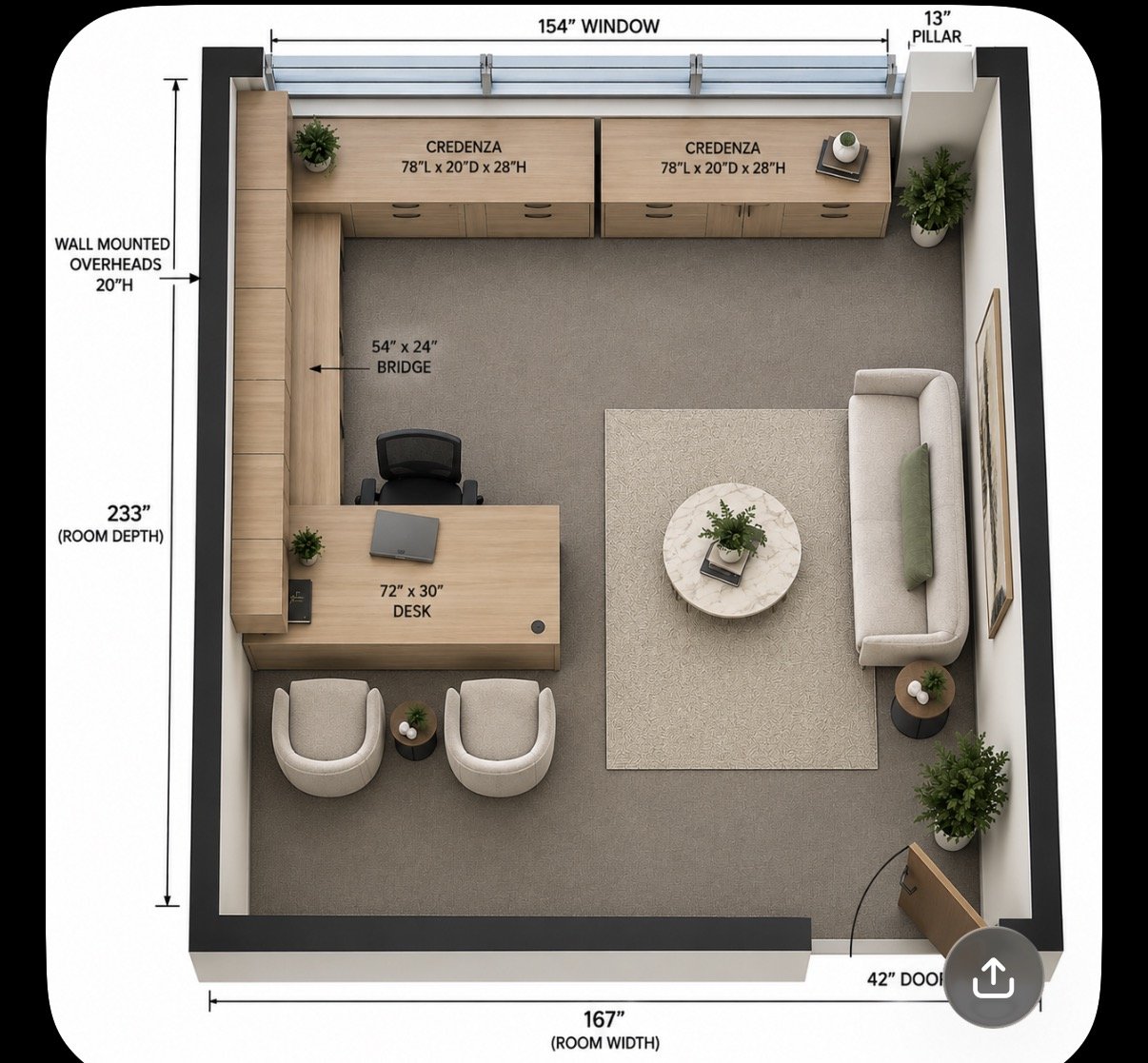
Optimizing the footprint of executive ergonomic office chairs involves more than aesthetic placement; it requires a technical assessment of clearance zones and path-of-travel requirements. Century City high-rises often feature premium square footage that demands precise floor plan execution. In these environments, every inch of floor space must be utilized efficiently to maintain a professional, uncluttered atmosphere. Coordinating your seating with executive boardroom furniture in Los Angeles ensures that your high-value assets function together without creating physical bottlenecks during high-stakes meetings.
Local delivery logistics present unique challenges in Southern California. Navigating the commercial zones of Santa Monica and Beverly Hills requires a methodical approach to loading dock access and strict parking restrictions. A professional procurement strategy accounts for these variables early in the project timeline. This prevents delays and ensures that the transition from delivery to installation is seamless. Selecting executive ergonomic office chairs that align with the spatial limitations of your suite is only the first step; the final execution depends on precise logistical coordination.
Space Planning for Private Executive Suites
Calculating the "swing radius" is essential when specifying large-format executive chairs for private suites. This measurement accounts for the full rotation and recline of the chair, ensuring it does not collide with credenzas or guest seating. Creating multi-functional zones within a single office allows an executive to transition from focused desk work to casual collaboration without moving to a separate room. Utilizing professional office space planning services helps identify these clearance requirements before the furniture arrives, mitigating the risk of spatial mismatches.
Strategic Seating for Boardrooms and Conference Centers
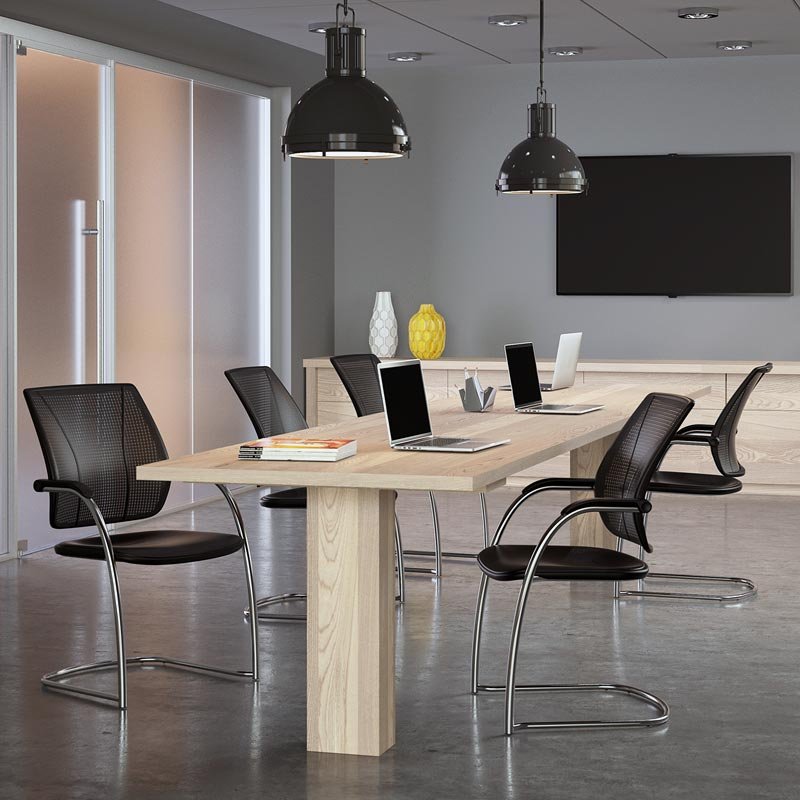
Procuring for scale in Irvine and Valencia corporate headquarters often involves balancing quantity with a clear sense of hierarchy. While large-scale conference rooms require a uniform aesthetic, many firms choose to distinguish leadership seating to reinforce corporate structure. In high-occupancy meeting spaces, the focus shifts to durability and ease of movement. You must balance the need for medical-grade support with the practicalities of a high-density layout. Ensuring that each seat provides consistent performance across a 20-person boardroom requires a strategic partnership with an expert who understands the technical specifications of commercial-grade furniture.
Contact 3S Interior Design to schedule a logistical assessment for your Southern California office build-out.
Strategic Procurement: The 3S Interior Design Advantage
Procuring executive ergonomic office chairs is a logistical project that requires professional oversight rather than a simple retail transaction. Retail models prioritize individual sales and often leave the complexities of assembly and debris removal to the client. This approach is unsuitable for high-stakes corporate environments where operational downtime carries significant financial risk. Turnkey solutions outperform retail purchases by managing the entire project lifecycle, ensuring that the furniture integrates perfectly with the firm's broader operational goals. 3S Interior Design maintains a manufacturer-agnostic approach, which allows for the selection of high-performance seating based on specific budget constraints and technical requirements rather than brand affiliation.
Professional installation is a mandatory component of a successful corporate build-out. Managing executive ergonomic office chairs involves more than just delivery; it requires coordinating with facility managers and navigating strict loading dock schedules. Our team handles the end-to-end process, including the removal of all packaging materials and protective wraps. This ensures the executive suite is ready for immediate use upon completion. Ongoing support and logistical reliability are central to our service model, providing growing firms with a seasoned partner to manage their evolving furniture needs.
From Consultation to Final Installation
The 3S process begins with a comprehensive site assessment to identify the specific needs of the leadership team. This methodical step eliminates the hidden costs of self-managed office furniture projects, such as assembly errors, damaged shipments, or spatial mismatches. Utilizing turnkey workspace solutions in Los Angeles streamlines corporate moves by providing a single point of accountability for procurement and white-glove delivery. This continuity of service ensures that the initial design intent is reflected in the final execution without the friction of managing multiple vendors.
Procuring for Scale and Future Growth
Large-scale Santa Monica tech hubs and Irvine corporate headquarters require robust inventory management to support rapid expansion. Standardizing executive seating across multiple Southern California locations creates a cohesive corporate identity and simplifies long-term maintenance protocols. We manage complex lead times and logistical coordination for new construction projects, ensuring that furniture arrives precisely when the site is prepared for installation. This long-term mindset helps firms maintain operational stability while scaling their physical footprint across the region. By focusing on the functional success of each project, we build professional relationships that prioritize the long-term success of your facility.
Optimizing Leadership Performance Through Strategic Procurement
Selecting the right executive ergonomic office chairs is a strategic investment in your firm's operational stability and leadership productivity. As 2026 regulatory standards emphasize active ergonomics, your procurement process must balance medical-grade support with corporate prestige. High-performance materials like top-grain leather or advanced mesh ensure your seating withstands the Southern California climate while projecting authority in boardrooms from Century City to Irvine.
A successful build-out requires more than a retail purchase; it demands end-to-end project management and professional installation across Southern California. 3S Interior Design provides a curated commercial-grade inventory and manages every logistical detail, from site assessment to final debris removal. This methodical approach eliminates the hidden costs of self-managed furniture projects and ensures your private office is ready for high-stakes decision-making. We invite you to Request a Professional Seating Consultation to align your workspace with your executive performance goals. We look forward to securing the functional success of your next corporate project.
Frequently Asked Questions
What defines a chair as "executive ergonomic" versus a standard task chair?
Executive ergonomic office chairs differ from standard task chairs through their advanced calibration and material quality. While task chairs provide basic support for general administrative duties, executive models feature high-density foams, polished aluminum frames, and reactive synchro-tilt mechanisms. These features support the varied postures used during high-stakes decision-making. They prioritize both medical-grade ergonomic support and the "quiet luxury" aesthetic required for leadership environments in Century City or Beverly Hills.
How much should a Southern California business budget for high-end executive seating?
Budgeting for high-end seating depends on the technical specifications and material choices required for your project. Firms in Southern California should consider the long-term ROI of medical-grade support versus the lower initial cost of standard furniture. Factors influencing the total investment include material durability, the complexity of the ergonomic mechanisms, and the scale of the procurement. 3S Interior Design provides manufacturer-agnostic planning to identify the best seating options within your specific budgetary framework.
Is leather or mesh better for an executive office in Los Angeles?
The choice depends on your office's climate control and desired aesthetic. Leather remains the standard for prestige in Beverly Hills boardrooms, offering durability and a classic professional image. However, advanced mesh membranes are increasingly popular in Culver City and Downtown LA high-rises due to superior thermoregulation. Mesh allows for constant airflow, which is critical for maintaining comfort in the Southern California climate. Both materials offer high-performance support when specified with commercial-grade frames.
Do you provide professional installation for executive chairs in Beverly Hills?
Yes, 3S Interior Design provides professional installation services throughout Beverly Hills and the surrounding Southern California region. Our team manages the entire logistical process, including loading dock coordination, assembly, and debris removal. This turnkey approach eliminates the risks of damage or improper assembly associated with retail delivery. We ensure that your executive seating is installed correctly and ready for immediate use, allowing your leadership team to remain focused on operational goals.
How does space planning impact the choice of executive office chairs?
Space planning is a critical precursor to seating selection. Large-format executive chairs require a specific "swing radius" to ensure full rotation and recline without colliding with private office desks or casegoods. Professional space planning identifies these clearance requirements in advance, preventing logistical bottlenecks in high-density Century City offices. This methodical assessment ensures that your chosen seating fits the physical footprint of your suite while maintaining a professional, uncluttered environment in your Santa Monica facility.
Can executive ergonomic chairs be integrated with height-adjustable desks?
Executive ergonomic office chairs are highly compatible with height-adjustable desks. The adjustability of the chair allows the user to maintain proper posture regardless of whether the desk is in a sitting or standing position. Features like adjustable armrests and seat depth are essential for aligning the body correctly with the work surface. This combination supports the "behavioral blueprint" recommended by 2026 OSHA guidelines, encouraging movement and reducing musculoskeletal strain throughout the workday.
What is the typical warranty for commercial-grade executive seating?
Commercial-grade executive seating typically carries robust warranties that significantly outperform retail products. Most industry-leading manufacturers offer multi-year coverage on structural components and pneumatic cylinders, often ranging from five to ten years. These warranties are designed for intensive, multi-shift corporate use rather than occasional residential application. When you procure through a professional partner like 3S Interior Design, we help manage these manufacturer relationships to ensure long-term operational stability for your facility.
How do I ensure the chairs match our existing office casegoods?
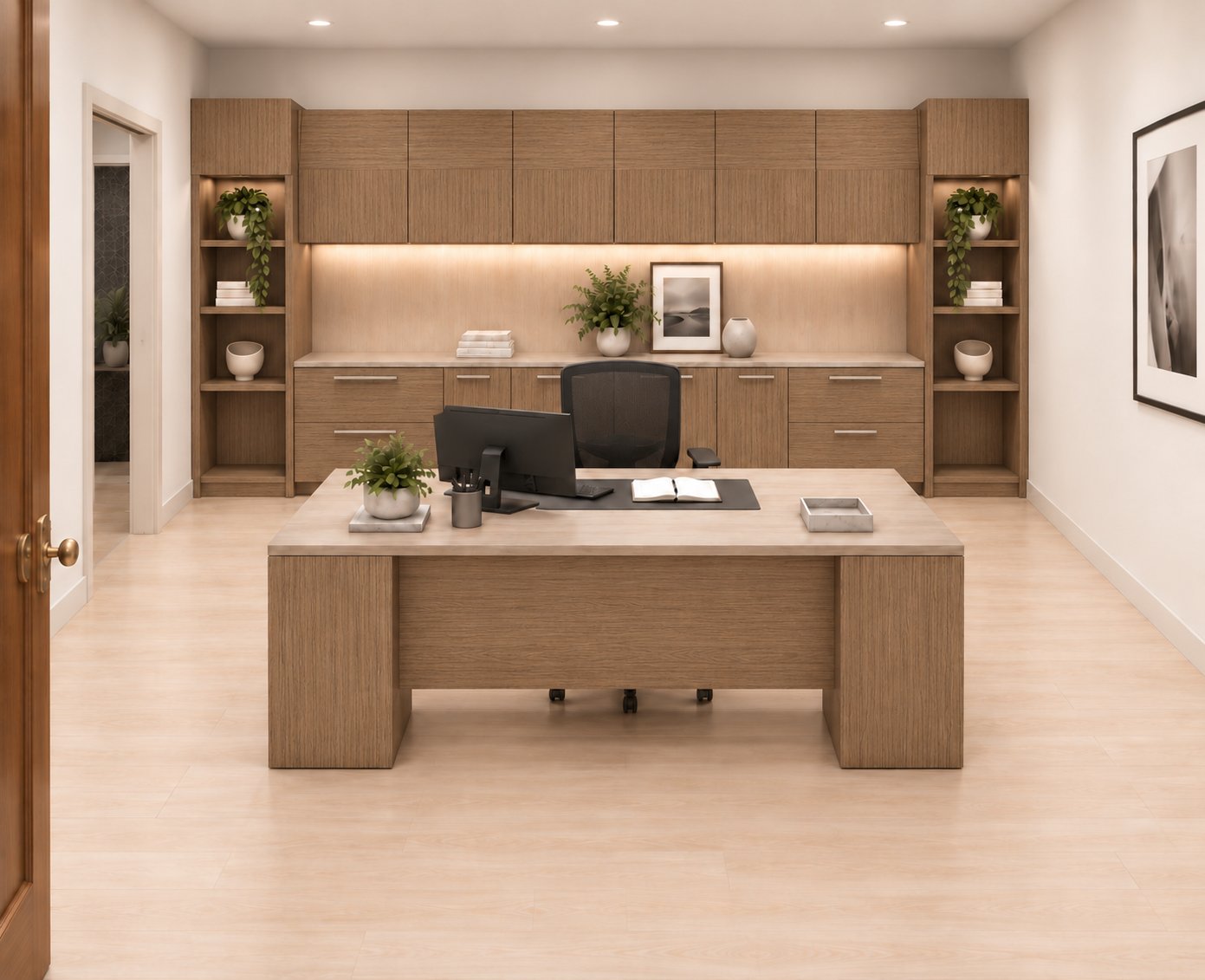
Ensuring a cohesive aesthetic requires a technical evaluation of material finishes and design styles. We coordinate seating selections with your existing private office desks and casegoods by matching wood veneers, metal accents, or upholstery textures. This methodical approach prevents the mismatched appearance often found in self-managed projects. Our curated selection includes a wide range of professional styles, allowing us to find high-performance seating that reinforces your firm's brand identity and existing office design.
Comments