


Adjustable Height Tables: 2026 Professional Guide
Integrating a professional adjustable height table into a corporate floor plan is a logistical challenge that extends far beyond simple procurement. Many organizations invest heavily in ergonomic hardware only to find their offices cluttered with exposed wiring and mismatched finishes that undermine professional standards. You've likely seen how poor power access and cable management can turn a well-intentioned wellness initiative into a significant safety and aesthetic liability.
This guide provides a strategic roadmap for facility managers to implement height-adjustable solutions that deliver measurable ROI and long-term operational stability. You'll learn how to coordinate technical specifications with professional space planning to eliminate employee ergonomic complaints while maintaining a unified office appearance. We'll examine the transition from initial procurement to final installation, focusing on the precise logistical details required for a reliable, high-performing furniture infrastructure. This methodical approach ensures your workspace remains flexible and functional for the next decade of corporate growth.
Table of Contents
Defining the Role of Adjustable Height Tables in Modern Workspaces
An adjustable height table serves as a core component of professional ergonomic infrastructure. It's no longer just a trend; it's a strategic asset for corporate environments that prioritize operational efficiency. These systems allow a seamless transition from static desks to active workstations, enabling employees to alternate between sitting and standing without disrupting their workflow. This flexibility is critical for maintaining focus and mitigating the physical fatigue associated with prolonged sedentary behavior.
Distinguishing between residential standing desks and commercial-grade systems is vital for procurement specialists. Commercial solutions are designed for long-term durability and precision engineering. Selecting these tables requires a parallel evaluation of seating; choosing between ergonomic task chairs vs executive chairs ensures the entire workstation supports dynamic movement. A table is only as effective as the ergonomic system surrounding it, making a coordinated procurement strategy essential for success.
The Evolution of Sit-Stand Technology
The development of adjustable height standing desks has moved from manual, fixed-height surfaces to advanced motorized platforms. Early models often relied on loud, slow motors that were disruptive in open-plan offices. Modern 2026 standards prioritize silent, high-capacity lifting mechanisms that can adjust height in seconds. This shift supports the needs of a hybrid workforce where multiple users with different physical requirements share the same desk on different days. Professional systems now offer memory presets that allow for rapid, personalized adjustments, ensuring the furniture adapts to the person rather than forcing the person to adapt to the furniture.
Why Commercial-Grade Quality Matters
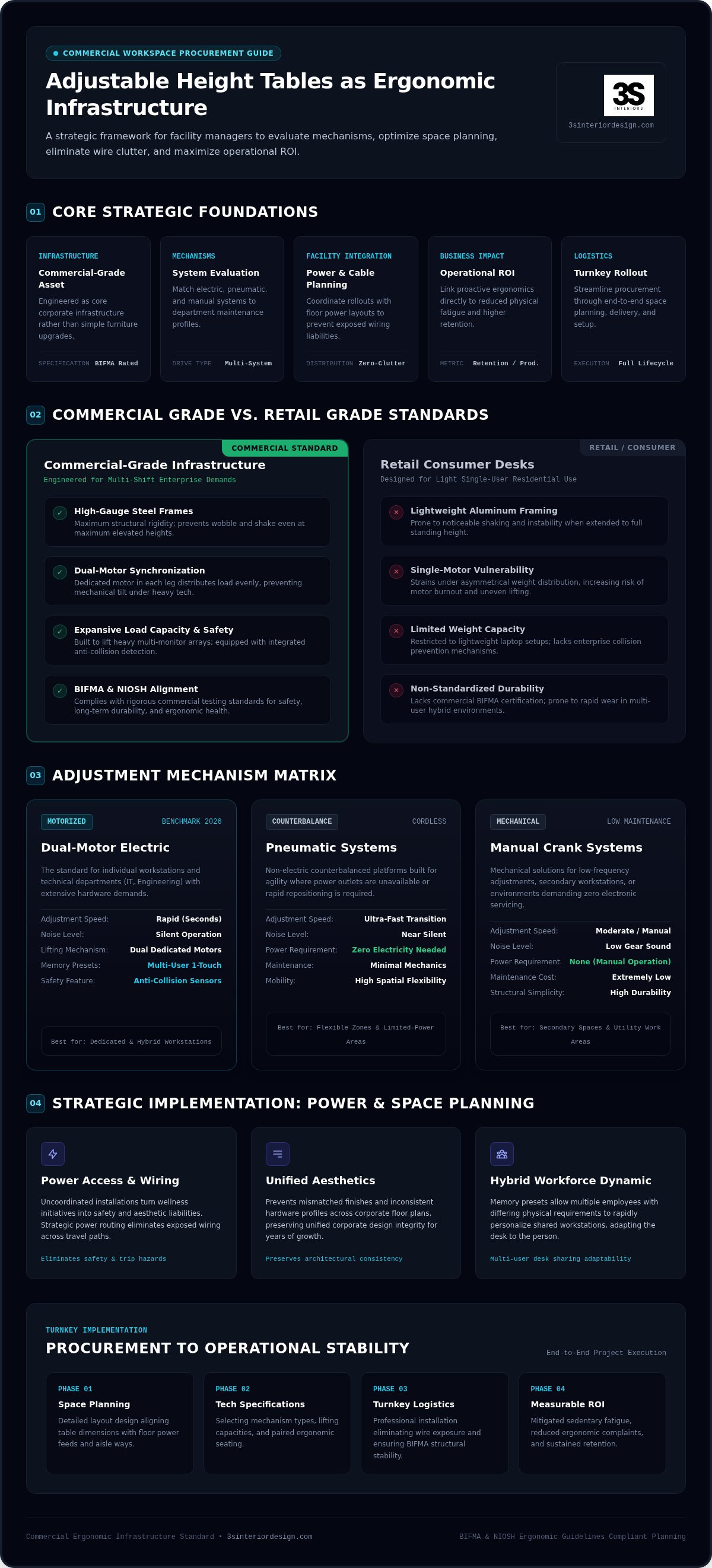
Durability is the primary factor that separates professional furniture from retail alternatives. Commercial-grade frames are typically constructed from high-gauge steel, providing a level of stability that lightweight aluminum retail frames cannot match. This rigidity is necessary when supporting expansive monitor arrays or heavy hardware. A table that shakes at its highest setting is a liability, not a solution, and can lead to employee complaints or equipment damage.
Weight capacity remains a critical technical specification for facility managers to monitor. While consumer desks might support only basic laptop setups, a commercial adjustable height table is engineered to lift significant loads without straining the motor. BIFMA standards provide the definitive benchmarks for safety, durability, and structural performance in height-adjustable tables, ensuring they withstand the rigors of a professional office environment for years to come.
Evaluating Adjustment Mechanisms: Electric vs. Manual Systems
Choosing the right adjustable height table mechanism depends on the specific logistical requirements of your facility. Facility managers must balance adjustment speed, noise levels, and long-term maintenance costs to ensure the furniture infrastructure remains reliable. While electric systems are the standard for individual workstations, pneumatic and manual options provide critical functionality in areas where power access is limited or high-speed transitions are required. A methodical assessment of your department-specific needs prevents over-investing in unnecessary technology or under-equipping high-demand zones.
The Advantages of Dual-Motor Electric Systems
Dual-motor electric systems represent the benchmark for stability and performance in 2026. By placing a dedicated motor in each leg, these tables distribute weight evenly and prevent the "tilting" effect common in single-motor retail models. These systems are essential for departments like IT or engineering, where heavy monitor arrays and specialized hardware require high lifting capacities. Following workplace ergonomics guidelines from NIOSH, these tables allow users to transition between postures with minimal effort. Modern units include programmable memory settings, allowing shared-desk users to reach their preferred height with one touch. Anti-collision technology acts as a standard safety feature, stopping the motor if it detects an obstruction like a chair arm or a filing cabinet.
When to Choose Manual or Pneumatic Tables
Non-electric tables offer distinct advantages in specific corporate zones. Pneumatic counterbalance systems use a gas cylinder to lift the surface almost instantly, making them significantly faster than electric motors. They're ideal for collaborative spaces or flexible meeting rooms where users need to adjust heights without searching for floor outlets or managing power cords. Manual crank tables require the least maintenance and are a cost-effective solution for low-traffic areas or secondary workstations. They provide a reliable alternative in facilities where electrical infrastructure is at capacity or where budget constraints require a mix of furniture types.
Maintenance requirements vary significantly across these mechanisms. Electric motors require periodic checks of control boxes and power cables to ensure ongoing safety. Pneumatic cylinders are highly durable but may eventually lose pressure after years of high-frequency use. Manual systems are virtually maintenance-free but lack the ease of use found in motorized versions. When planning your layout, consider the noise levels; premium commercial motors operate at less than 50 decibels, ensuring that frequent adjustments don't disrupt the concentrated work of neighboring colleagues. If you're coordinating a large-scale rollout, our team at 3S Interior Design can help you select the precise mechanism mix to optimize your operational ROI.
Strategic Implementation: Power Distribution and Space Planning
Procuring an adjustable height table is only the first step in a successful ergonomic rollout. Integrating these systems into a high-density office requires technical foresight and a focus on logistical coordination. Utilizing office space planning services before committing to a purchase ensures the physical dimensions and power requirements align with your building's existing infrastructure. While individual flexibility is the goal, a poorly planned implementation can create logistical bottlenecks that negate productivity gains.
Managing Electrical Loads and Floor Power
Motorized furniture introduces a new layer of electrical demand that facility managers must account for during the design phase. When dozens of desks operate simultaneously, the cumulative power draw can strain older electrical circuits. We coordinate directly with facility teams to identify under-floor power access points, ensuring each workstation has a dedicated and safe connection. Integrated surge protection is a non-negotiable technical requirement for commercial tables. This protection shields both the adjustment motors and the expensive computing hardware they support from electrical fluctuations. Proper technical coordination prevents blown breakers and ensures the long-term reliability of your furniture investment.
Optimizing Layouts for Standing Height
The spatial footprint of these tables differs significantly from traditional commercial workstations and cubicles. When users transition to a standing position, they create new line-of-sight challenges and alter the acoustic profile of the open office. Sound travels more freely when it's not being absorbed by seated bodies or low-profile partitions. Layouts must also account for the "spaghetti wire" problem, where moving parts cause cables to snag, stretch, or unplug during adjustment. We utilize integrated cable management chains to keep all wiring organized and secure throughout the table's full range of motion.
Effectively addressing the health risks of prolonged sitting requires a safe environment where tables are spaced to avoid collisions. A standing desk that hits a neighboring shelf or a glass partition during its ascent is a significant liability. Professional installation is the final, critical step in this process. Our teams ensure every adjustable height table is perfectly level and securely anchored, mitigating the risk of tipping or instability at maximum extension. This methodical approach transforms a simple furniture purchase into a stable, high-performing workspace infrastructure.
The Commercial Case: ROI, Wellness, and Retention
The decision to implement an adjustable height table system across a facility is an investment in operational ROI. While individual health benefits are well-documented, corporate decision-makers must view ergonomics through the lens of long-term asset management and employee retention. High-quality furniture infrastructure reduces the frequency of replacement cycles and provides the flexibility needed for future layout reconfigurations. This strategic approach ensures that your office remains functional as your team grows or your operational needs shift. It's a methodical way to mitigate the professional risk of mismatched or failing equipment.
Integrating premium sit-stand solutions also reinforces a cohesive brand identity. The quality of your workstations should mirror the professional standards set by your executive boardroom furniture in Los Angeles. A unified aesthetic across all departments projects an image of stability and precision to both clients and staff. When every level of the organization has access to high-performance furniture, it signals a consistent commitment to excellence.
Enhancing Employee Productivity and Engagement
Cognitive performance is closely linked to physical posture variety. Research suggests that the ability to change positions throughout the day maintains alertness and prevents the mental fatigue often caused by static environments. From a risk management perspective, providing ergonomic workstations can help reduce the frequency of workers’ compensation claims related to repetitive strain or poor posture. These tables are also essential for modern "hot-desking" models. Because an adjustable height table can be instantly customized to any user's physical requirements, it supports a diverse workforce without requiring specialized furniture for every individual. This inclusivity ensures that employees of all heights and physical abilities have an equally functional workspace.
Attracting Talent in Southern California
In competitive tech and professional hubs like Santa Monica or Irvine, the physical workspace is a tangible indicator of corporate culture. Modern professionals expect an environment that supports their physical well-being and operational needs. Investing in high-end ergonomic systems demonstrates a commitment to the employee experience, which is a powerful tool for talent acquisition and retention. As organizations refine their "return to office" strategies, providing a workspace that is objectively superior to a home office setup becomes a critical incentive. A well-equipped office in Orange County or Los Angeles serves as a hub for collaboration that employees actually want to visit. It transforms the office from a requirement into a destination.
Effective ergonomics is a hallmark of a well-managed organization. If you're ready to upgrade your facility's infrastructure, you can contact 3S Interior Design to begin your strategic furniture assessment. Our team manages the entire process to ensure your investment delivers immediate and lasting results.
Turnkey Procurement: Professional Installation in Southern California
Selecting the right adjustable height table is a strategic decision, but physical implementation determines the project's ultimate success. For large-scale corporate environments, the logistical burden of receiving, staging, and assembling hundreds of units is immense. This is where turnkey workspace solutions in Los Angeles provide essential value. By consolidating the entire project lifecycle under one provider, facility managers ensure every technical specification is met without the risk of logistical fragmentation. This end-to-end management style prioritizes operational continuity and professional standards over the DIY assembly models common in retail.
Our procurement approach is strictly manufacturer-agnostic. We don't push specific brands; we source equipment based on your technical requirements and budget constraints. This ensures your adjustable height table rollout remains financially viable while meeting the rigorous durability standards of a high-traffic office. We act as a strategic partner, aligning furniture capabilities with your specific space planning needs to maximize your long-term ROI.
The 3S Interior Design Process
The transition from initial consultation to final delivery follows a predictable, methodical timeline. We begin with comprehensive space planning to determine the optimal layout and power access points. Once the selection and procurement phases are complete, our professional installation teams take over. Utilizing professional installers is critical; they understand how to handle motorized components to prevent frame misalignment or motor damage. A single point of contact manages the entire build-out, providing clear communication and accountability throughout the project. This structure eliminates the confusion often caused by managing multiple vendors and ensures the final result matches the initial design intent perfectly.
Local Logistics and Installation Expertise
Navigating the complex building requirements in high-density areas like Beverly Hills or Century City requires specific local expertise. Commercial properties often have strict rules regarding loading dock access, Certificate of Insurance (COI) requirements, and after-hours delivery windows. Our teams are seasoned in managing these details, ensuring large-scale deployments occur without disrupting your daily business operations. We coordinate with building management to handle the heavy lifting and logistical coordination that facility managers often find overwhelming. If your organization is planning a workspace upgrade, contact 3S Interior Design to schedule a professional consultation. We provide the strategic guidance and logistical reliability needed to transform your Southern California office into a high-performance environment.
Strategic Infrastructure for the Modern Workspace
Implementing a professional adjustable height table system requires more than simple hardware procurement. It's a technical transition that transforms your office into a dynamic, flexible asset. By coordinating precise adjustment mechanisms with integrated power distribution, you eliminate the logistical chaos that often follows unmanaged furniture rollouts. This methodical approach ensures your workspace supports a diverse workforce while maintaining a polished, professional aesthetic. It's about building a reliable foundation that adapts to your operational needs for years to come.
Strategic space planning and expert installation are the final steps in securing long-term ROI and operational stability. We specialize in managing these complex details for businesses across Southern California, ensuring every phase of your project is executed with precision. You can Request a Professional Workspace Consultation with 3S Interior Design to begin optimizing your facility's infrastructure. Our turnkey project management services cover everything from initial layout design to final delivery in locations ranging from Santa Monica to Irvine. We look forward to helping you build a more resilient and productive office environment.
Frequently Asked Questions
Are adjustable height tables worth the investment for a full office?
Yes, implementing an adjustable height table system is a strategic investment in employee retention and operational flexibility. Commercial-grade units offer a longer lifespan than retail furniture, which reduces future replacement costs. By providing workstations that adapt to individual physical needs, organizations mitigate the risk of ergonomic complaints and support a more inclusive environment. This infrastructure also future-proofs the office for hybrid work models and shifting headcount requirements.
How much weight can a commercial-grade electric desk typically hold?
Commercial-grade electric desks are typically engineered to support between 200 and 350 pounds, depending on the specific motor configuration. Dual-motor systems provide the highest stability for heavy monitor arrays and specialized computing hardware. It's essential to verify that the lifting capacity includes the weight of the work surface itself. Professional-grade frames ensure that even at maximum capacity, the adjustment remains smooth and the surface remains stable without wobbling.
Do I need a special electrician to install motorized office desks?
Most motorized desks operate on standard 120V power and don't require specialized electrical work for individual units. However, large-scale deployments in areas like Los Angeles require coordination with facility managers to ensure floor power circuits handle the cumulative load. Our professional installation teams manage the technical setup, including cable management and power connection. We also help verify local power code requirements for motorized furniture to ensure full compliance.
How do adjustable height tables integrate with existing cubicle systems?
Strategic integration is possible through manufacturer-agnostic planning and professional layout design. We can often retrofit existing cubicle footprints by replacing static work surfaces with height-adjustable bases. This process requires careful measurement to ensure the table has enough clearance to move vertically without hitting privacy panels or storage units. Professional space planning ensures that these active workstations fit seamlessly into your current environment while maintaining a cohesive aesthetic.
What is the average lifespan of a motorized table in a corporate setting?
High-quality motorized tables are designed for a service life of 5 to 10 years in high-traffic corporate environments. The lifespan depends on the quality of the motor and the frequency of use. Systems that meet BIFMA standards for durability and safety are engineered to withstand thousands of adjustment cycles. Regular maintenance, such as checking cable connections and ensuring the frame is level, helps extend the operational reliability of the furniture infrastructure.
Can adjustable tables be used in conference rooms or executive suites?
Yes, height-adjustable technology is increasingly common in executive suites and conference rooms to support dynamic meeting styles. Large-scale adjustable height table systems allow teams to transition between seated presentations and standing collaborative sessions. In executive settings, these tables are finished with premium veneers and integrated technology access to match the professional brand image. This versatility supports diverse meeting requirements while reinforcing the organization's commitment to modern ergonomic standards.
How do I manage cables so they don’t pull when the table is raised?
Effective cable management requires the use of flexible cable chains that expand and contract with the table's movement. These systems keep power and data lines organized, preventing them from snagging or unplugging at maximum height. Our installation teams prioritize integrated wire management during the setup phase. By securing cables to the underside of the work surface, we ensure a clean appearance and prevent damage to expensive hardware during adjustment.
Does 3S Interior Design provide space planning for sit-stand desks in Irvine?
3S Interior Design provides comprehensive space planning and turnkey installation services for businesses in Irvine and throughout Orange County. We manage the entire process, from initial consultation to final delivery, ensuring your layout maximizes floor space and power access. Our local expertise allows us to navigate the specific logistical requirements of commercial properties in Irvine's business hubs. We act as a strategic partner to ensure your furniture investment meets functional goals.


Comments