


Executive Office Furniture Sets in Century City: A Commercial Buying Guide
What if the right executive office furniture set isn’t a fixed bundle? For executive office furniture sets Century City businesses need, start with the office itself: its dimensions, the work performed there, and the storage and seating required each day. A coordinated desk, credenza, and chair may look complete on paper but still be a poor fit if the layout and workflow haven’t been considered.
Choosing a cohesive setup matters, but it shouldn’t mean buying pieces you don’t need or overlooking items that support daily work. Connect private office desks and casegoods with ergonomic seating and storage based on how the space will actually be used.
This guide explains how to assess room dimensions and layout, identify the right furniture components, and coordinate selection with procurement, delivery, and professional installation. It also covers project details to confirm in Century City, including building access and delivery requirements. A plan grounded in function and scope can help move the project from furniture decisions to an organized installation process with fewer avoidable surprises.
Table of Contents
Executive office furniture sets Century City: what should they include?
How to evaluate executive office furniture sets for fit and function
Coordinated furniture set or individually selected pieces: which is the better fit?
What Century City buyers should confirm before ordering executive office furniture
How 3S Interior Design can take a Century City furniture project from plan to installation
Executive office furniture sets Century City: what should they include?
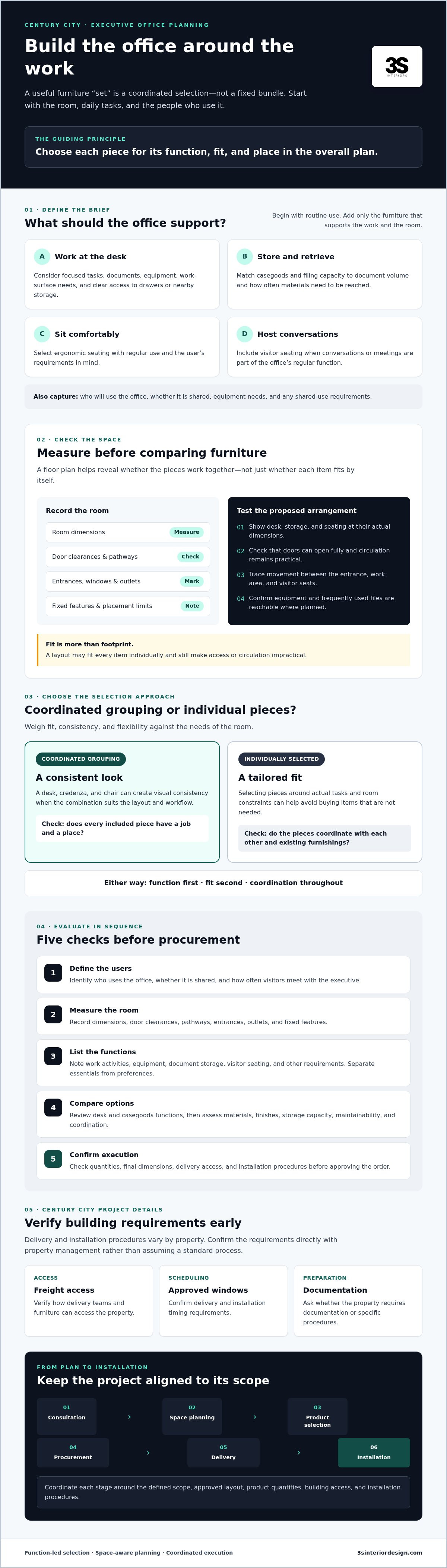
An executive office set is best treated as a coordinated selection, not a fixed bundle or named collection. Start with the work the office must support: focused desk tasks, equipment use, document handling, visitor conversations, and scheduled meetings. Those requirements determine which pieces belong in the plan and which can be left out.
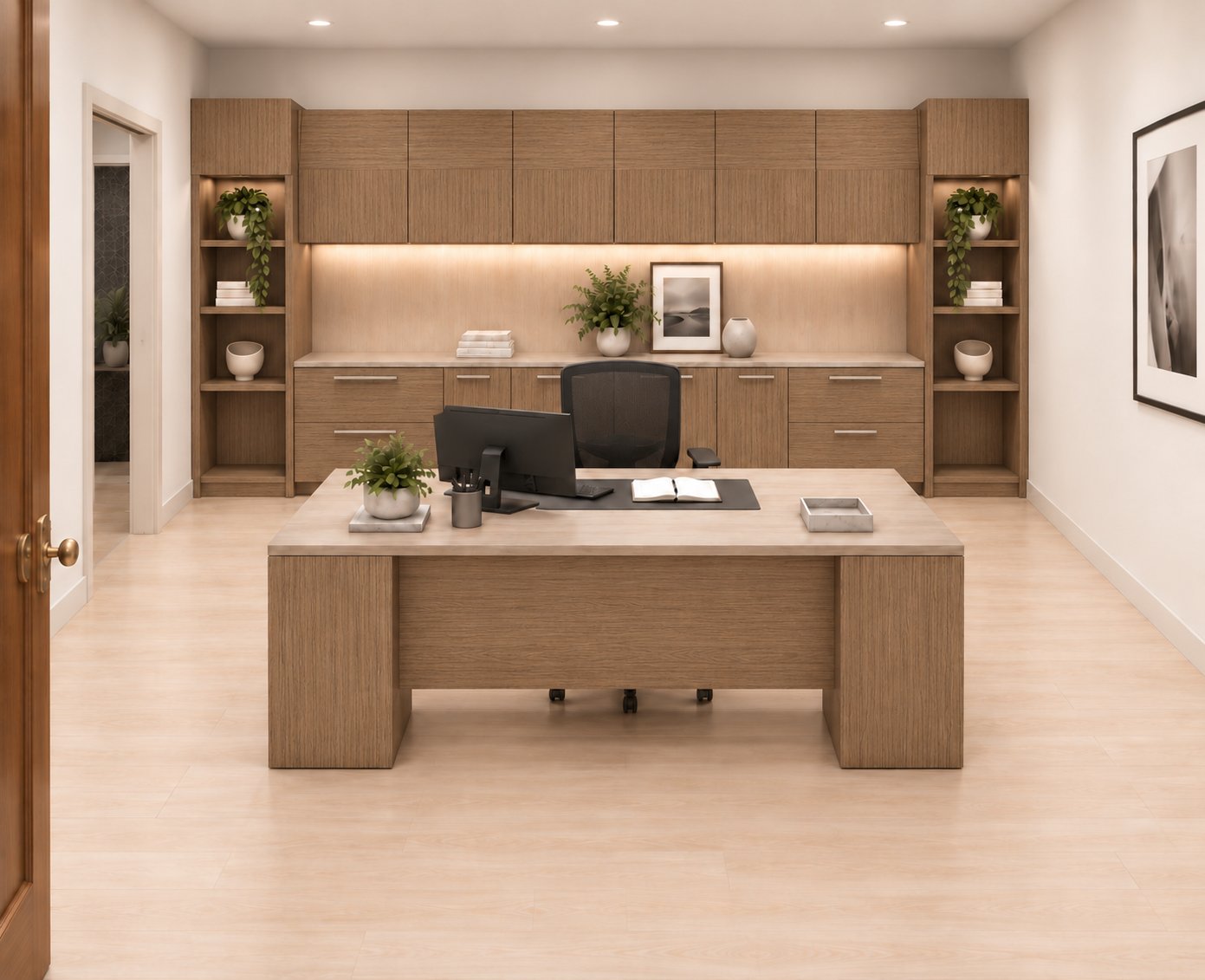
For executive office furniture sets, Century City buyers should start with private office desks and casegoods, then add seating and storage according to actual use. A matching appearance can create visual consistency, but every piece should also fit the room, allow circulation, and work with furnishings already in place.
Which furniture components support an executive office?
Specify the desk around its daily tasks. Note the work surface needed for documents and equipment, where devices will sit, and whether the user needs clear access to drawers or nearby storage. Match casegoods and filing systems to document volume and how frequently materials must be reached. Select ergonomic seating for regular use and the user’s requirements. This overview of office chair types and ergonomic features can help frame what to consider.
Desk and casegoods: Plan the main work area and supporting surfaces together.
Storage: Choose capacity and access based on office operations, not appearance alone.
Seating: Consider how long the chair will be used and who will use it.
Visitor seating: Include it when conversations or meetings are part of the office’s regular function.
How does the Century City office shape the brief?
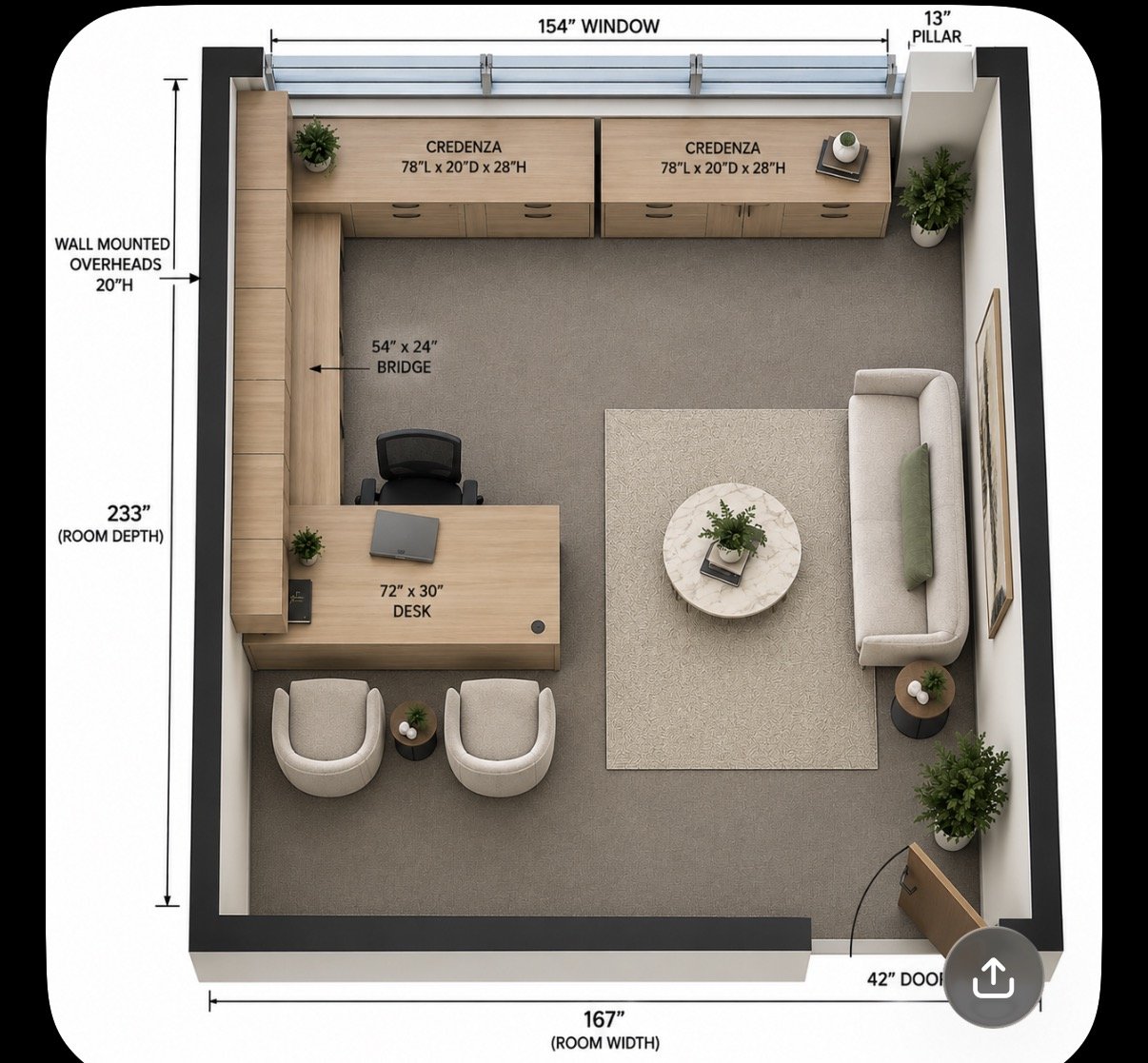
Record the room’s dimensions and mark entrances, windows, outlets, and fixed features before comparing furniture. Then map the desk, storage, and seating to check circulation and visitor flow. Include the number of occupants and any shared-use needs in the brief. A furniture plan that fits on paper should also preserve practical access throughout the room.
Building logistics matter too. Before finalizing selections, confirm the property’s procedures for freight access, delivery, and installation, including any required documentation or approved installation windows. These details vary by property, so verify them directly with management rather than assuming a standard process. A clear room plan and confirmed access requirements give the selection and project scope a practical foundation.
How to evaluate executive office furniture sets for fit and function
A reliable evaluation process turns the office brief into decisions that can be checked before procurement. For executive office furniture sets in Century City, compare function, fit, and coordination together rather than choosing a desk or finish in isolation.
1. Define the users. Identify who will use the office, whether the space is shared, and how often visitors meet with the executive.
2. Measure the room. Record room dimensions, door clearances, pathways, and placement constraints. Mark entrances, outlets, and fixed features on a simple layout.
3. List the functions. Note routine work activities, equipment, document storage, visitor seating, and any other required furniture. Separate essential requirements from preferences.
4. Compare options. Review desk and casegoods functions first, then assess materials, finishes, storage capacity, maintainability, and how each piece coordinates with the rest.
5. Confirm execution. Check quantities, final dimensions, delivery access, and installation procedures before approving the order.
Test the proposed arrangement on a floor plan before procurement. Show the desk, storage, and seating at their actual dimensions, then check whether doors can open fully and users can move between the entrance, work area, and visitor seats without obstruction. Confirm that equipment and frequently used files can be reached from their planned positions. A layout that accommodates each item individually may still be impractical if pieces compete for access or circulation space.
What measurements and use requirements should buyers confirm?
Measure the usable room and document door clearances, pathways, and locations that limit furniture placement. List equipment and storage needs alongside the work activities they support. For example, a workstation used for document review may need a different surface arrangement from one focused on computer-based tasks. Mark must-haves separately from preferences so comparisons stay grounded in operational needs.
How should buyers compare coordinated furniture options?
Start with the desk and casegoods: verify that they support the required work, access, and storage. Then assess whether each proposed piece fits the layout and works with existing furnishings. Compare finishes and materials for visual coordination, but also consider how surfaces can be maintained and whether storage capacity matches document volume. A coordinated result doesn’t require every component to be identical.
Seating deserves a functional review of its own. Consider how the chair will be used and who will use it. This guide to executive chair and task chair differences can help structure that comparison. For a closer look at desk and casegoods decisions, consult the private office desks and casegoods procurement guide. If the project needs coordinated planning and selection, commercial space planning and furniture coordination can be part of the project scope.
Coordinated furniture set or individually selected pieces: which is the better fit?
Neither approach is automatically the better choice. For executive office furniture sets in Century City, the decision depends on how well the selected pieces fit the measured room, support the work, and meet the project’s coordination needs. A coordinated grouping can create a consistent look, while individual selections can address specific constraints. A practical plan may combine both: align the desk and casegoods, then select seating or storage separately where the space or use calls for it.
When can coordinated selections simplify procurement?
Aligning key pieces can make it easier for stakeholders to review a defined scope. For example, a team can evaluate a desk and casegoods together for function and finish, then decide whether to include storage or seating. This approach is useful when decision-makers need a clear, consistent basis for comparing options. It doesn’t guarantee lower cost, faster delivery, or compatibility. Dimensions, specifications, and project requirements still need review.
Coordination also doesn’t require every item to match exactly. Related finishes or complementary forms can connect the office while allowing a different chair or storage piece to serve its particular function.
When should a furniture plan stay more flexible?
Keep the selection flexible if the room has unusual dimensions, existing furnishings must remain, or the executive’s work varies across the day. A fixed grouping may include pieces that compete for space or duplicate existing storage. Instead, specify the desk and casegoods that meet core requirements, then add only the seating and storage the layout can accommodate.
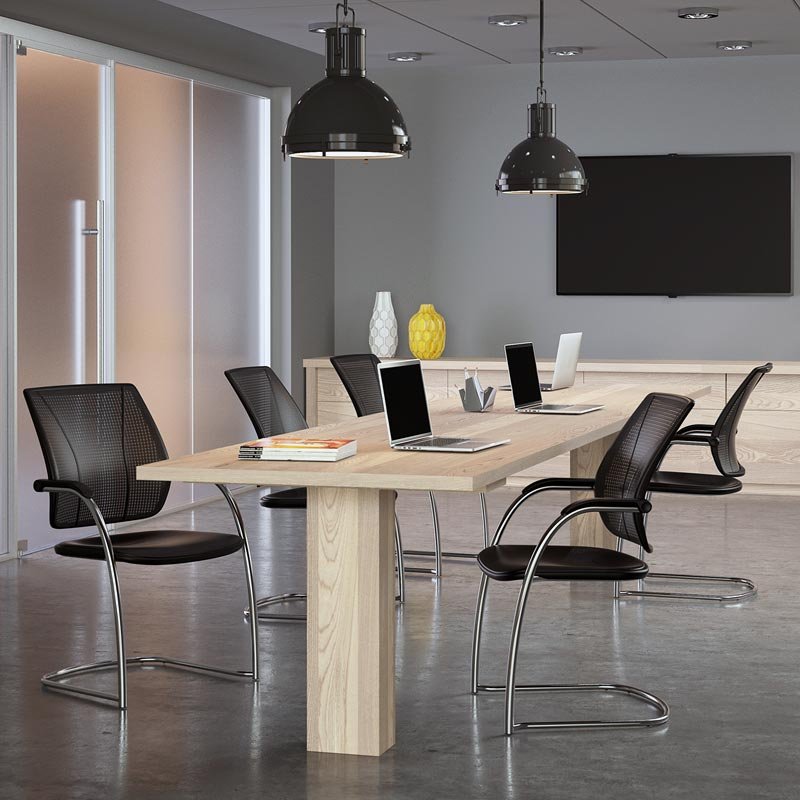
For a separate meeting space, assess its requirements independently rather than treating it as an extension of the private office. The executive boardroom furniture guide can help frame that distinction. For a project that needs coordinated selection and space planning, commercial office furniture planning can be considered as part of the scope.
What Century City buyers should confirm before ordering executive office furniture
Before approving executive office furniture sets for a Century City project, close the gap between the furniture plan and the building’s delivery and installation requirements. A layout can be approved and selections finalized, yet site procedures may still affect how and when items can reach the office. Confirm those details directly with property management and document who is responsible for each approval.
Which site and building details should be checked?
Ask building management about loading access, freight elevator reservations, receiving procedures, installation rules, and any required building documentation. Then verify the full route from the receiving area to the executive office. Doorways, corridors, elevators, and turns may affect whether selected items can be moved into place as planned. Record constraints, required approvals, and the person responsible for obtaining them before scheduling delivery or installation.
Layout: Confirm the approved furniture plan and the final positions of each item.
Order details: Verify quantities, selected finishes, and the items included in the approved scope.
Site access: Document freight access, elevator procedures, receiving requirements, and the delivery route.
Installation: Confirm permitted installation windows, building rules, and required documentation.
Responsibilities: Identify who approves selections, coordinates with property management, and communicates changes.
How can buyers reduce procurement and installation uncertainty?
Assign one decision-maker to approve the scope, selections, and any changes. This gives the project team a clear point of contact and reduces the risk of conflicting instructions. Before procurement proceeds, confirm how product selection, purchasing, delivery, and professional installation responsibilities fit together. Keep the approved layout and order details aligned so changes to quantities or finishes are shared with everyone managing the project.
Treat delivery dates, installation windows, and building access as project-specific details, not assumptions. Confirm them with the relevant parties and revisit them if the scope changes. This is especially important when property procedures affect freight access or require advance coordination. A documented handoff from planning through installation helps stakeholders understand what is approved and what still needs confirmation.
Once the site requirements and project scope are clear, discuss project coordination with 3S Interior Design to connect furniture planning, procurement, delivery, and professional installation within the defined scope.
How 3S Interior Design can take a Century City furniture project from plan to installation
Executive office furniture sets for Century City projects can involve several linked decisions, from defining the furniture scope to coordinating delivery and installation. 3S Interior Design supports commercial furniture projects through consultation, space planning, product selection, procurement, delivery, and professional installation. The scope can include private office desks and casegoods, ergonomic seating, or storage, depending on the office’s requirements. It doesn’t require a fixed package.
What information should buyers prepare for an initial consultation?
Bring the information that helps establish project requirements and identify open questions. Useful materials include room dimensions, project objectives, occupancy details, and known building procedures. Also note which furniture categories are needed, what existing assets may remain, and the preferred decision timeline. Flag site constraints and outstanding approvals early so they can be considered as the project scope takes shape.
How does turnkey coordination support project execution?
The process moves from planning into selection and execution, with client review points along the way. First, consultation clarifies objectives and scope. Space planning then relates the proposed furniture to the office and its use. Product selection identifies options for review, and the client confirms selections and scope before procurement proceeds. Delivery and professional installation are coordinated as part of the project plan, with property-specific requirements confirmed directly rather than assumed.
Clear decision points help maintain alignment. Buyers should know when to review the proposed layout, approve furniture selections, confirm quantities, and communicate any changes. This creates a shared reference for the people involved in purchasing and site coordination without implying a guaranteed schedule or outcome. For a broader overview of project coordination, see the turnkey workspace solutions guide.
With objectives, site information, and required categories documented, the project has a defined basis for planning and selection. To discuss an executive office furniture project with 3S Interior Design, contact the team about your project.
Move from furniture decisions to a coordinated project plan
The strongest executive office furniture sets Century City businesses choose are based on the work, the room, and the project requirements, not on a fixed bundle. A measured layout helps test fit and circulation, while a defined scope keeps desk, casegoods, seating, and storage selections tied to practical needs. Confirming building access and installation procedures before ordering also helps align the furniture plan with site requirements.
3S Interior Design provides commercial furniture selection and turnkey workspace services, with project coordination that can extend from consultation and space planning through procurement, delivery, and professional installation. Each project scope can be shaped around the office’s requirements and confirmed site details.
Ready to clarify the next steps for your office? Discuss your executive office furniture project with 3S Interior Design and move forward with a plan grounded in your space and operational needs.
Frequently Asked Questions
What should an executive office furniture set include?
An executive office set should include the pieces needed for the work, not a predetermined bundle. Start with a desk and casegoods, then assess whether the office also needs ergonomic seating, additional storage, or visitor seating. Consider equipment placement, document access, meeting patterns, and room dimensions before deciding. A coordinated look can come from complementary choices, so every piece doesn’t need to be identical.
How do I choose executive office furniture for a Century City office?
Choose executive office furniture sets Century City offices can accommodate by beginning with the user’s daily tasks and the room’s measurements. Record the locations of entrances, outlets, windows, and fixed features, then plan furniture placement and circulation. Compare desk and storage functions before finishes, and consider seating based on regular use. Confirm building delivery and installation procedures with property management before finalizing the project scope.
Are executive office furniture sets sold as fixed bundles?
Not necessarily. The term “set” can describe a coordinated selection of commercial furniture rather than a fixed bundle. A project might pair a private office desk and casegoods with seating or storage chosen to meet specific needs. This approach lets buyers define the scope around the office layout, existing furnishings, and daily operations. Confirm which pieces are included in any proposal and review each item’s dimensions and function.
How can I tell whether an executive desk will fit my office?
Compare the desk’s dimensions with a measured room plan before procurement. Include door clearances, pathways, outlets, fixed features, and the space needed to reach nearby storage or seating. Mark the proposed desk placement and check that the arrangement supports movement through the room. Also consider how equipment and work materials will be positioned. A desk that fits the room’s footprint may still disrupt access if circulation isn’t planned.
Can a furniture dealer coordinate delivery and installation in Century City?
Yes. 3S Interior Design supports projects through procurement, delivery, and professional installation. Its Southern California service locations include Los Angeles, Santa Monica, Encino, Burbank, Beverly Hills, Century City, Culver City, Brentwood, Compton, Long Beach, Carson, Thousand Oaks, Westlake Village, Pomona, Irvine, Valencia, and Sherman Oaks. Confirm loading access, receiving procedures, freight arrangements, and installation windows directly with property management, since requirements are building-specific.
What information should I prepare before requesting an executive office furniture proposal?
Prepare room dimensions, project objectives, occupancy details, and a list of required furniture categories. Note existing items that may remain, equipment and storage needs, and any preferences for finishes. Share known building procedures, site constraints, and approvals that are still outstanding. A preferred decision timeline can also help frame the project. These details support a clearer discussion of space planning, product selection, procurement, delivery, and installation requirements.
Should executive office furniture match the boardroom furniture?
No. The executive office and boardroom should each be planned for their distinct functions. They can share complementary finishes or other visual cues without using identical furniture. The office may prioritize focused work, personal storage, and smaller visitor meetings, while the boardroom needs to support group sessions. Assess each room’s dimensions, use, and circulation separately, then coordinate selections where appropriate to create a consistent professional environment.
Comments