


How to Choose a Contract Furniture Vendor for Your Project
A polished furniture quote isn’t enough to make a vendor the right fit. Knowing how to choose a contract furniture vendor means checking whether they can meet your functional requirements, coordinate procurement, delivery, and installation, and support the project over time. The right choice also depends on whether your project needs a commercial furniture partner with end-to-end coordination or a more limited purchasing arrangement.
Price and product selection matter, but so do project capacity, schedule coordination, site logistics, and clear responsibility from order through installation. A vendor’s role can extend well beyond supplying furniture, so define what your project needs and how each part will be handled.
This guide explains how to assess vendor capabilities, product coordination, delivery, installation, and ongoing support. It also outlines the practical differences between commercial furniture dealers and retailers, helping you identify the service model that fits your project scope and operational needs.
Table of Contents
What Should Interior Designers Consider When Specifying Contract Furniture?
Start with how people will use each space, how often the furniture will be used, and what the project requires. When choosing a contract furniture vendor, prioritize functional fit, commercial durability, appropriate materials, and clear product and construction details.
Define the setting, function, and constraints for each furniture group. An open-plan office, reception area, and conference room place different demands on seating, surfaces, and storage. Map furniture locations against the floor plan, dimensions, and circulation needs. Separate essential requirements from flexible preferences, such as appearance, finish, and maintenance. A defined scope helps vendors explain how each proposed piece suits its intended use, rather than relying on a general “commercial grade” label.
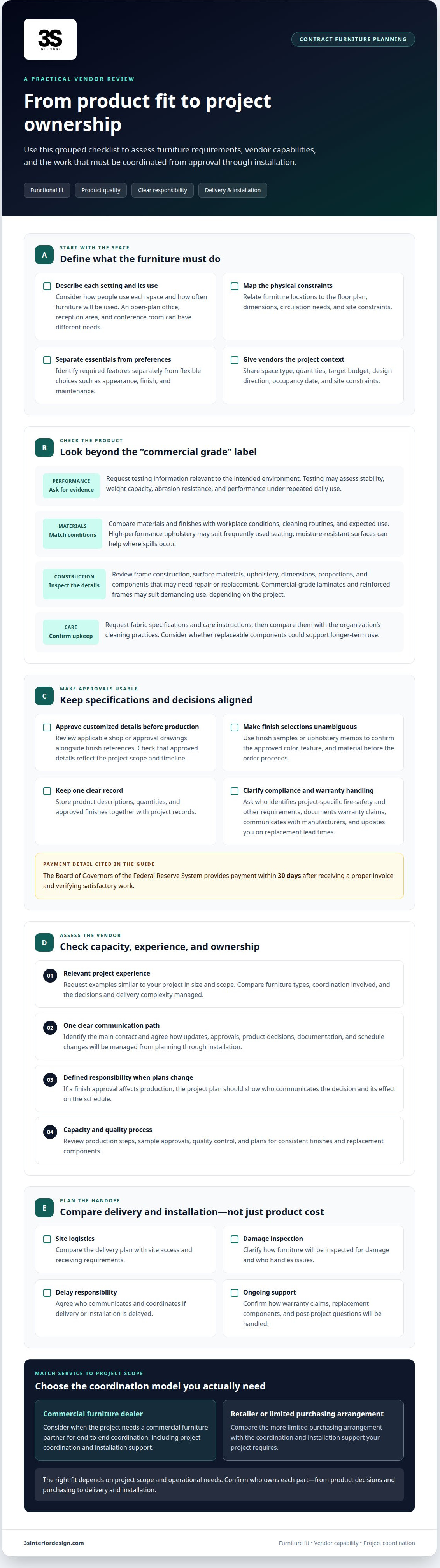
How a Contract Furniture Vendor Demonstrates Commercial Performance and DurabilityRequest durability information relevant to the intended environment, not just a broad product description. Commercial furniture testing may assess stability, weight capacity, abrasion resistance, and performance under repeated daily use. Use these criteria to compare products that look similar but serve different functions. In high-use areas, don’t treat a label alone as proof. Review the testing and construction details that explain how the product performs.
How a Contract Furniture Vendor Helps Choose Durable Materials and FinishesMatch materials and finishes to workplace conditions, cleaning routines, and expected use. High-performance upholstery may suit frequently used seating, while moisture-resistant surfaces can help in areas exposed to spills. Request fabric specifications and care instructions, then compare them with the organization’s cleaning practices. For customized selections, review finish samples or upholstery memos so the approved color, texture, and material are clear before the order proceeds.
How a Contract Furniture Vendor Verifies Construction QualityAsk how construction details support the intended use and how durability is assessed. Review explanations of frame construction, surface materials, upholstery, and components that may need repair or replacement. Commercial-grade laminates and reinforced frames can suit demanding use, but the right choice depends on the project. Check that dimensions and proportions fit the furniture’s function, and consider whether replaceable components could support longer-term use.
Set approval and documentation expectations before production. For customized furniture, review applicable shop drawings or approval drawings alongside finish references. Confirm that the approved details reflect the project scope and timeline, reducing the chance of mismatched materials or dimensions. Keep product descriptions, quantities, and approved finishes together with the project records. The Board of Governors of the Federal Reserve System provides payment within 30 days after receiving a proper invoice and verifying satisfactory work.
Assessing vendor capabilities and project ownership
Compare vendors on relevant project experience, communication, compliance planning, and clear ownership of decisions. Assess quality, durability, and warranty support together by reviewing product details, testing information, and the process for claims and replacement components. Customization and space planning should reflect your space type, quantities, budget, design direction, and site constraints.
How to Verify a Contract Furniture Vendor’s Reputation and Relevant ExperienceRequest examples from projects similar to yours in size and scope. Experience with a reception area, for example, may differ from experience coordinating furniture across several office spaces. Compare the project requirements, furniture types, and coordination involved. Look for examples that show the vendor can manage the decisions and delivery complexity your project requires.
What to Expect From a Contract Furniture Vendor on Compliance and Warranty SupportAsk how the vendor identifies fire-safety and other project-specific requirements. Testing and certification needs may vary by product category, application, project type, building requirements, and tender specifications. Clarify who documents warranty claims, which records are needed, and who communicates with the manufacturer. Establish how replacement lead times are communicated and how post-project support handles claims involving upholstery, finishes, or other components.
What to Expect From a Contract Furniture Vendor’s Communication and Project ManagementAgree on how updates, approvals, and changes will be managed from planning through installation. Identify the main contact and clarify who coordinates product decisions, documentation, and schedule changes. For example, if finish approval affects production, the project plan should show who communicates the decision and its effect on the schedule. Clear ownership helps connect design decisions, purchasing, delivery, and installation.
How a Contract Furniture Vendor Can Support Customization and Space PlanningProvide the vendor with the space type, quantities, target budget, design direction, occupancy date, and site constraints. Ask how those inputs shape the proposed layout and any customized selections. A floor map helps identify furniture needs and placement across spaces, while approval drawings can clarify dimensions and finishes before production. For a coordinated layout, space-planning and layout design can connect furniture selection with room requirements.
Set project responsibilities in writing before procurement begins. Record who approves products, finishes, dimensions, and substitutions, then define how revisions reach the people responsible for purchasing and installation. A shared decision log can link each approval to the relevant product and schedule. This is especially useful when multiple teams review conference rooms, reception areas, or workspaces with different functional requirements.
Delivery, installation, and long-term service
Map site access before scheduling delivery. Record door widths, elevator access, floor conditions, loading areas, and available storage. A conference table, for example, may need a different route from boxed chairs. Share delivery-hour restrictions and building access procedures with the project team. These details shape the delivery plan and help identify access issues before furniture arrives. Include measurements and site constraints in the schedule, not only in informal emails.
Compare delivery proposals by scope, not by headline total. Confirm whether each includes freight, receiving, inside delivery, installation, debris removal, and required accessories. Identify who inspects furniture for damage and how damage is documented. A quote that excludes receiving or installation may leave important tasks unassigned. Before approving the order, record the shipping method, delivery assumptions, and each party’s responsibilities in the project documents.
Build the schedule around every stage between approval and occupancy. The timeline may include sample approval, order processing, custom engineering, manufacturing, quality review, transit, appointment scheduling, and installation. Ask whether furniture will arrive together or in separate shipments, and establish how delays affect the sequence. If workstations arrive in stages, for example, the installation plan should show which areas can be completed first.
Plan phased delivery when the building must remain operational. Divide the work by floor, department, or room, then align each phase with access and installation windows. Identify where incoming furniture can be received and stored without obstructing active spaces. In dense urban locations, elevator reservations, loading-dock windows, and street permits can affect scheduling. Coordinate these constraints with the installation sequence so furniture can move through the building efficiently.
Define installation completion and post-project responsibilities in advance. Specify who assembles and places each item, removes packaging, and records outstanding issues. After installation, keep product records and warranty documents together so future claims have the details needed for manufacturer communication. Clarify how replacement components are handled and how related lead times are communicated. Replacing an individual component may avoid replacing an entire piece when only that part is damaged or worn.
Assign one person to own schedule updates and delivery coordination. They should communicate changes to shipment timing, site access, and installation sequence to the affected teams. A delayed conference table, for example, may affect room readiness even if the seating has arrived. A written update should identify the affected items, revised delivery plan, and next decision. Clear communication keeps facilities teams, project teams, and installers working from the same schedule.
Evaluating manufacturing experience and capacity
Assess whether the vendor’s manufacturer relationships, product coordination, and documentation suit your project scope. A complete proposal should identify products, dimensions, quantities, finishes, delivery assumptions, and exclusions, and explain the schedule and responsibilities.
How to Assess a Contract Furniture Vendor’s Brand Portfolio and Manufacturer PartnershipsAsk which brands and manufacturers the vendor can source, then compare the options with your design, use, and schedule requirements. Check whether proposed products meet the project’s construction and performance needs instead of choosing by brand name alone. For a hospitality project, for example, confirm that the recommended furniture suits the setting and maintenance routine.
Questions to Ask a Contract Furniture Vendor About Manufacturer CoordinationAsk how the vendor communicates product questions, approvals, and changes to manufacturers. Review the process from design and sampling through approval, production, quality control, packaging, shipping, and delivery. Clarify who shares updates if a finish or production issue changes the schedule. A clear coordination process shows which decisions need your approval and who owns each follow-up.
Review the proposal line by line before comparing it with another offer. Check product descriptions, dimensions, quantities, finishes, lead times, delivery assumptions, and exclusions. Confirm that substitutions preserve comparable dimensions, construction, performance, finish, and warranty terms. If a proposal groups several pieces together, request enough detail to identify what is included and how each item relates to the approved plan.
Read the contract terms for payment stages, cancellation conditions, and responsibilities at each milestone. Confirm what triggers an invoice, what documentation supports payment, and how changes affect approved orders. Make sure the proposal and contract describe the same products, quantities, delivery scope, and exclusions. Record unresolved differences before approval to avoid conflicting expectations later.
Assess sustainability across the furniture lifecycle, not through a single label. Review available information about material sourcing, manufacturing, durability, repairability, recyclability, chemical emissions, packaging, and end-of-life considerations. Ask how the documentation applies to the specific products proposed. Compare those details with your organization’s environmental criteria, and distinguish product-level evidence from broad claims about a brand or manufacturer.
Assess manufacturing capacity against your project’s actual quantities and future needs. Discuss minimum order quantities, sample quantities, bulk production, repeat-order requirements, mixed-container options, and replacement-order policies. Ask how finish consistency is maintained across units and future phases. Include production time in the project schedule, and clarify how sample approvals or material selections affect the sequence before manufacturing begins.
Build relationships with trusted suppliers and communicate project needs clearly. Include manufacturing time in the project schedule, discuss matching or closely coordinated finishes for future phases, and confirm how consistency can be maintained across furniture units.
Commercial furniture dealers compared with retailers
Compare the service model, not just the product selection. Commercial furniture dealers can coordinate projects, delivery, and professional installation. Retailers may provide limited or no installation support, leaving the buyer to manage more of the work.
Match the provider model to your project scope. Outfitting several workplace rooms calls for coordinated product selection, delivery, and installation. A straightforward purchase with little coordination may need a different service model. Before comparing options, list the spaces, furniture quantities, required functions, and occupancy timeline. This makes it easier to see whether a proposal covers the whole project or only the products.
Compare what each proposal includes beyond the furniture. A commercial furniture project may coordinate planning, procurement, delivery, and installation, while a retailer’s offer may focus mainly on product purchase. Check freight, receiving, inside delivery, assembly, installation, and debris removal as separate responsibilities. Delivery to a building entrance, for example, doesn’t necessarily include placing furniture in each office or conference room.
Consider how installation affects daily operations. A commercial furniture partner can coordinate delivery and installation around site conditions, including access routes and room readiness. Ask how the installation sequence will work in occupied spaces or during phased work. If a reception area must remain open, for example, the plan should state when furniture arrives and when the space will be ready for use again. Limited installation support may leave these tasks to your team.
Consider maintenance and replacement needs over the furniture’s expected use. Commercial furniture projects may include multiple matching pieces, so future replacements can depend on consistent finishes and available components. Review care guidance, warranty handling, and the process for replacement parts. For matching conference room chairs, a documented product specification helps identify the original finish and model if a chair later needs repair or replacement.
Make the decision using a like-for-like comparison. Check that each option covers the same products, quantities, delivery scope, installation work, and project coordination. A lower proposal total may reflect fewer included services rather than a comparable overall offer. Choose the model that aligns with your operational capacity: a dealer can suit projects needing coordinated execution, while a retailer model may suit a simpler transaction. Plan commercial furniture installation as part of a coordinated project.
A retailer may suit a simpler purchase if your team can manage any coordination not included. A commercial furniture partner may fit better when those responsibilities need to be assigned and tracked. Compare proposals on the same basis: identify included tasks, responsibilities left to your team, and who handles changes if the site isn’t ready. This makes price differences easier to interpret without assuming either service model is automatically less costly.
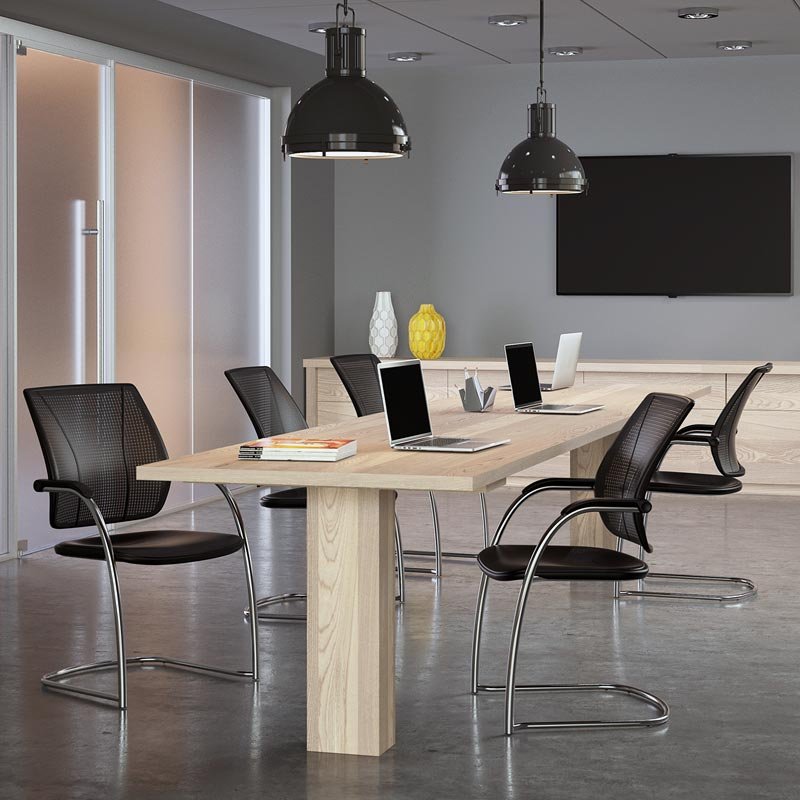
Check that the chairs meet the same functional requirements, intended use, finish expectations, and support needs before judging by price alone. If the options differ, record those differences and compare them with the project’s priorities. The right offer is the one whose scope and responsibilities match what your workplace can manage.
3S Interior Design
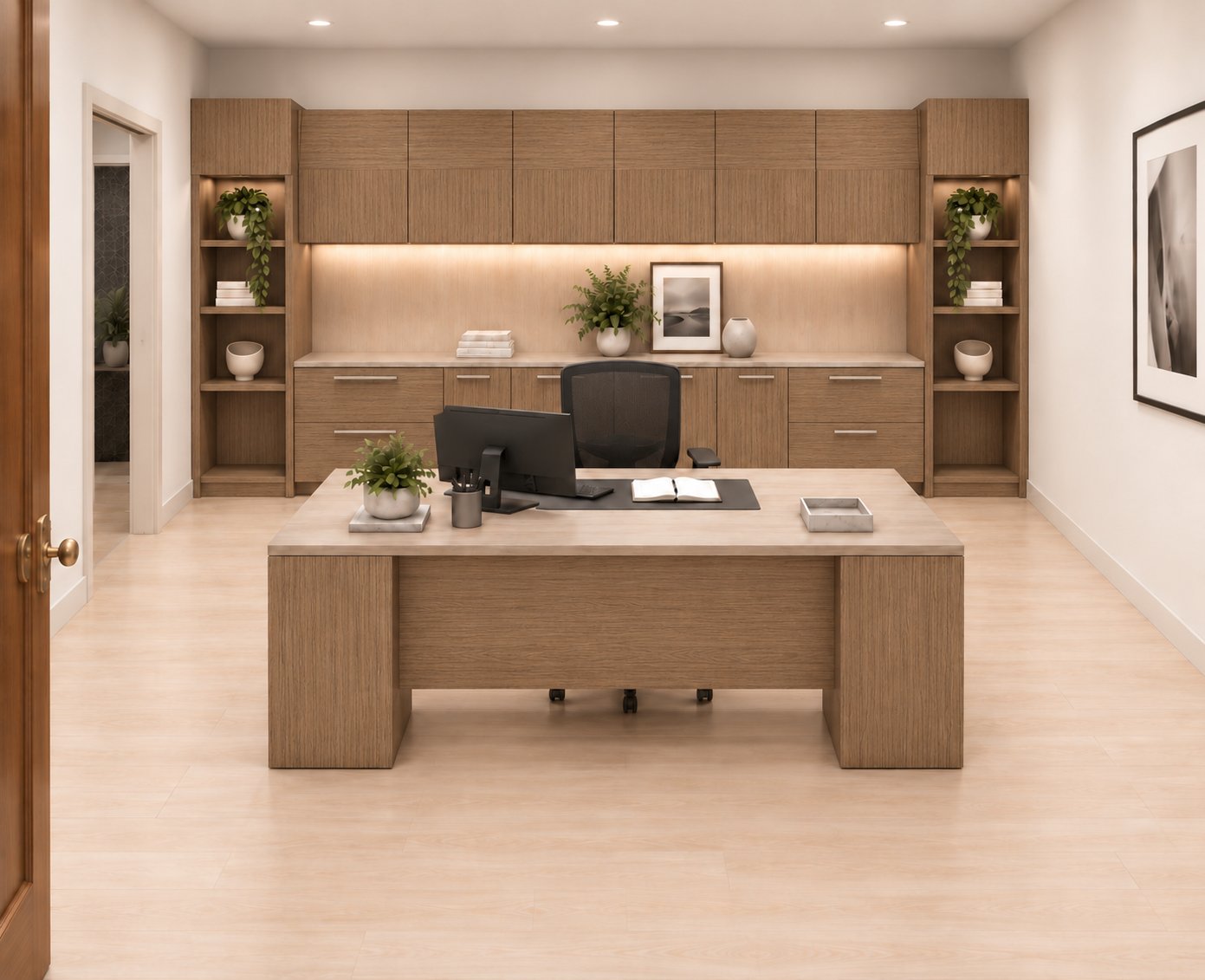
3S Interior Design can help businesses turn vendor-selection criteria into a coordinated commercial office furniture project. It manages the process from consultation and space planning through product selection, procurement, delivery, and professional installation. This is a practical next step when a project requires more than product sourcing, especially when several work areas must function as one plan. Furniture options include private office desks and casegoods, ergonomic office seating, workstations and cubicles, and conference room furniture. Share your space requirements, priorities, and project scope to start a focused discussion about the right approach. Contact 3S Interior Design to discuss your commercial furniture project.
Move Your Furniture Plan Into Execution
A sound vendor decision builds a working relationship that can support your space as needs change. As you apply what you’ve learned about how to choose a contract furniture vendor, focus your next discussion on priorities, constraints, and the decisions needed to keep the project moving. A clear project brief gives that conversation a practical starting point.
3S Interior Design supports commercial workspace projects with private office desks and casegoods, ergonomic office seating, and workstations and cubicles. These options can be considered alongside your layout and operational requirements, helping connect furniture selection with the way your teams use the space.
Bring your project scope and workspace priorities into the next conversation. Contact 3S Interior Design to discuss your commercial furniture project and identify a practical next step.
Frequently Asked Questions
What certifications and safety standards should contract furniture meet in the US?
Applicable testing and certification requirements depend on the product, its use, and the project specifications. Seating in a particular facility, for example, may face different requirements from furniture in a standard office. Review product documentation against the building requirements, client criteria, and tender documents that apply to your project. Look for evidence specific to the furniture proposed instead of assuming one certification covers every item or application.
How can I evaluate a furniture vendor’s experience, references, and financial stability?
Review relevant project records, completed work, and business continuity together. Look for experience with comparable project scope, coordination needs, and furniture categories, then examine references for evidence of follow-through and clear ownership. Available business records and trade references can help assess financial stability, alongside the vendor’s ability to manage procurement and project commitments. For a multi-site rollout, look for experience coordinating work across locations while maintaining consistency.
How do lead times, shipping, installation, and project management vary by vendor?
Schedules vary with product selection, customization, production, shipping, site access, and installation scope. Projects in Los Angeles, Santa Monica, Encino, Burbank, Beverly Hills, Century City, Culver City, Brentwood, Compton, Long Beach, Carson, Thousand Oaks, Westlake Village, Pomona, Irvine, Valencia, and Sherman Oaks may also involve coordination across locations. Assign clear owners for approvals, delivery updates, site readiness, and installation decisions.
What warranty, repair, replacement, and after-sales support should I expect?
Expect written, product-specific warranty terms and a defined process for reporting issues. Coverage, exclusions, required records, and remedies depend on the product’s warranty. Keep order details, product identification, and issue documentation together so a claim can be reviewed efficiently. Plan for repairs and replacement components as well, since addressing a damaged part may avoid replacing an entire furniture piece.
Comments