


Burbank Corporate Furniture Vendor: A Practical Buying Guide
The strongest furniture proposal isn’t necessarily the one with the most options. A Burbank corporate furniture vendor should connect furniture choices to your floor plan, operating needs, budget priorities, and installation plan. When selection, planning, procurement, delivery, and setup are treated as separate tasks, gaps can surface late, when they’re harder to resolve.
It’s reasonable to expect more than a polished product presentation. Desks, seating, workstations, conference furniture, and storage need to support how teams work and fit the spaces they’ll occupy. A clear buying process helps you make those decisions before furniture arrives.
This guide offers a practical framework for evaluating a vendor’s role across the full project. You’ll learn how space planning informs product selection, how to match furniture to workplace requirements and budget priorities, and how consultation, procurement, delivery, and professional installation can form one coordinated path. The goal is a furniture plan that serves the business, not just the floor plan.
Table of Contents
What a Burbank Corporate Furniture Vendor Should Coordinate
A corporate furniture project involves more than selecting desks or seating. A corporate furniture vendor is a commercial project partner that coordinates consultation, space planning, furniture selection, procurement, delivery, and installation around a workplace’s requirements. Each phase shapes the next: the layout informs product choices, selections determine procurement needs, and delivery and installation rely on decisions made earlier.
Commercial procurement differs from residential shopping or an individual retail purchase. A business is planning for teams, work areas, shared functions, and operational priorities, not simply choosing a single item. The scope may bring together private office desks and casegoods, ergonomic seating, workstations, conference furniture, reception furniture, storage, and height-adjustable tables. For a Burbank project, start with how the workplace needs to function, then connect those requirements to a coordinated furniture plan.
How a vendor’s scope affects a Burbank office project
Set the project around three factors: workplace requirements, defined scope, and operational priorities. For example, a team that needs distinct areas for focused work and meetings needs a plan that considers how those functions fit into the available space. Choosing each furniture category independently can leave the overall layout unresolved. Burbank has a historical connection to furniture production, reflected in Burbank's manufacturing history, but a current office project still needs decisions grounded in its own layout and use.
Coordination helps reduce handoff gaps. If space planning and product selection happen in isolation, an item may not suit its intended area. If delivery and installation are treated as afterthoughts, the project team may lack a clear picture of how furniture moves from procurement into the workplace. A defined scope connects the phases and clarifies which decisions are needed, when they’re needed, and how they affect the next step.
Consultation: Establish business goals, workplace priorities, and budget parameters.
Space planning: Translate those priorities into a layout with functional zones.
Selection and procurement: Align furniture categories with the plan and move approved choices into purchasing.
Delivery and installation: Coordinate the transition from procured items to an arranged, usable workspace.
Furniture supply versus turnkey workspace support
Product-only purchasing focuses on the items. Turnkey workspace support connects those items to planning and installation, giving the project a clearer route from requirements to an outfitted space. The buyer still sets the direction by defining workplace goals, identifying operational priorities, and establishing budget parameters. The vendor uses those inputs to guide planning and selection, then coordinate the project phases. For a broader look at this service model, explore turnkey workspace solutions in Los Angeles.
For Burbank businesses, 3S Interior Design supports commercial furniture projects from consultation and space planning through tailored selection, procurement, delivery, and professional installation. Treating these as connected responsibilities gives decision-makers a practical basis for evaluating project scope, not just a catalogue of available furniture.
How to Evaluate a Burbank Corporate Furniture Vendor
A useful evaluation compares how a project will be managed, not just how furniture looks in a presentation. For a Burbank corporate furniture vendor, look for a clear connection between workplace needs, space planning, product selection, procurement, delivery, and installation. Define what your team needs to decide and what the project partner will deliver at each stage.
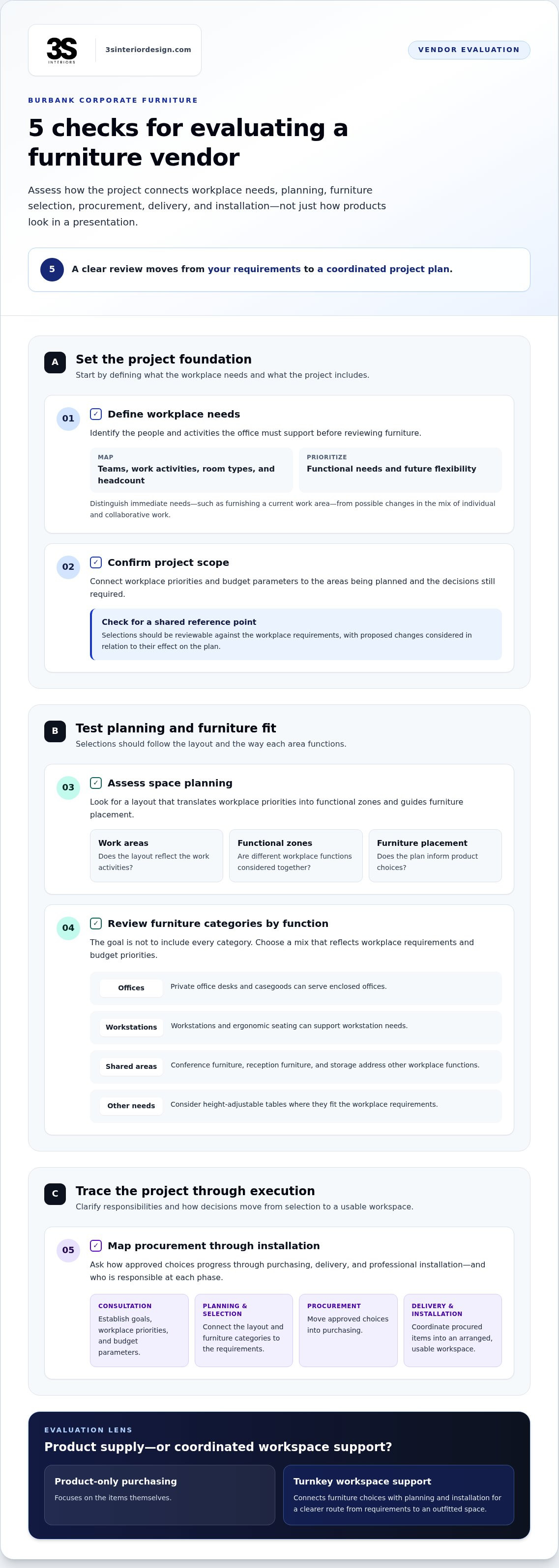
Use this five-step checklist: define workplace needs, confirm project scope, assess space planning, review furniture categories, and map procurement through installation. Compare responsibilities and tangible deliverables rather than relying on broad promises or assuming credentials alone demonstrate project fit.
Start with workplace requirements and project scope
Begin with the people and activities the office needs to support. Note the teams, work activities, room types, headcount, and functional priorities. Separate immediate requirements, such as furnishing a current work area, from future flexibility, such as accommodating a different mix of individual and collaborative work. This keeps the project focused while accounting for potential changes.
An initial consultation can turn those inputs into a defined scope. Connect priorities and budget parameters to the areas being planned and the decisions still required. A clear scope gives the project a reference point: selections can be reviewed against workplace requirements, and proposed changes can be considered in relation to their effect on the plan.
Assess product range, planning, and execution together
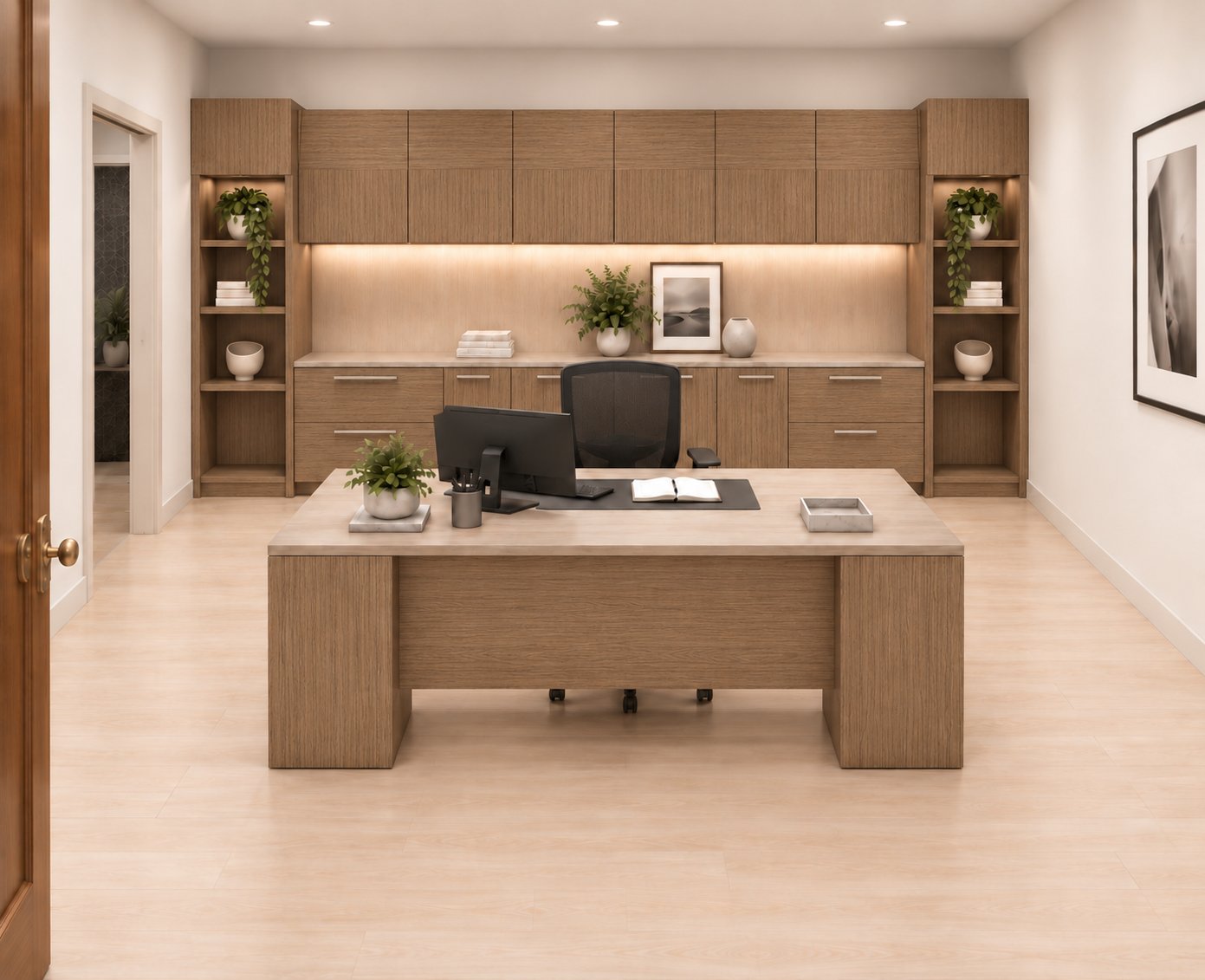
Review furniture categories in relation to how each area functions. Private office desks and casegoods may serve enclosed offices; ergonomic seating can support workstation and meeting needs; conference, reception, and storage furniture address other workplace functions. The goal isn’t to include every category. It’s to build a selection that reflects your requirements and budget priorities.
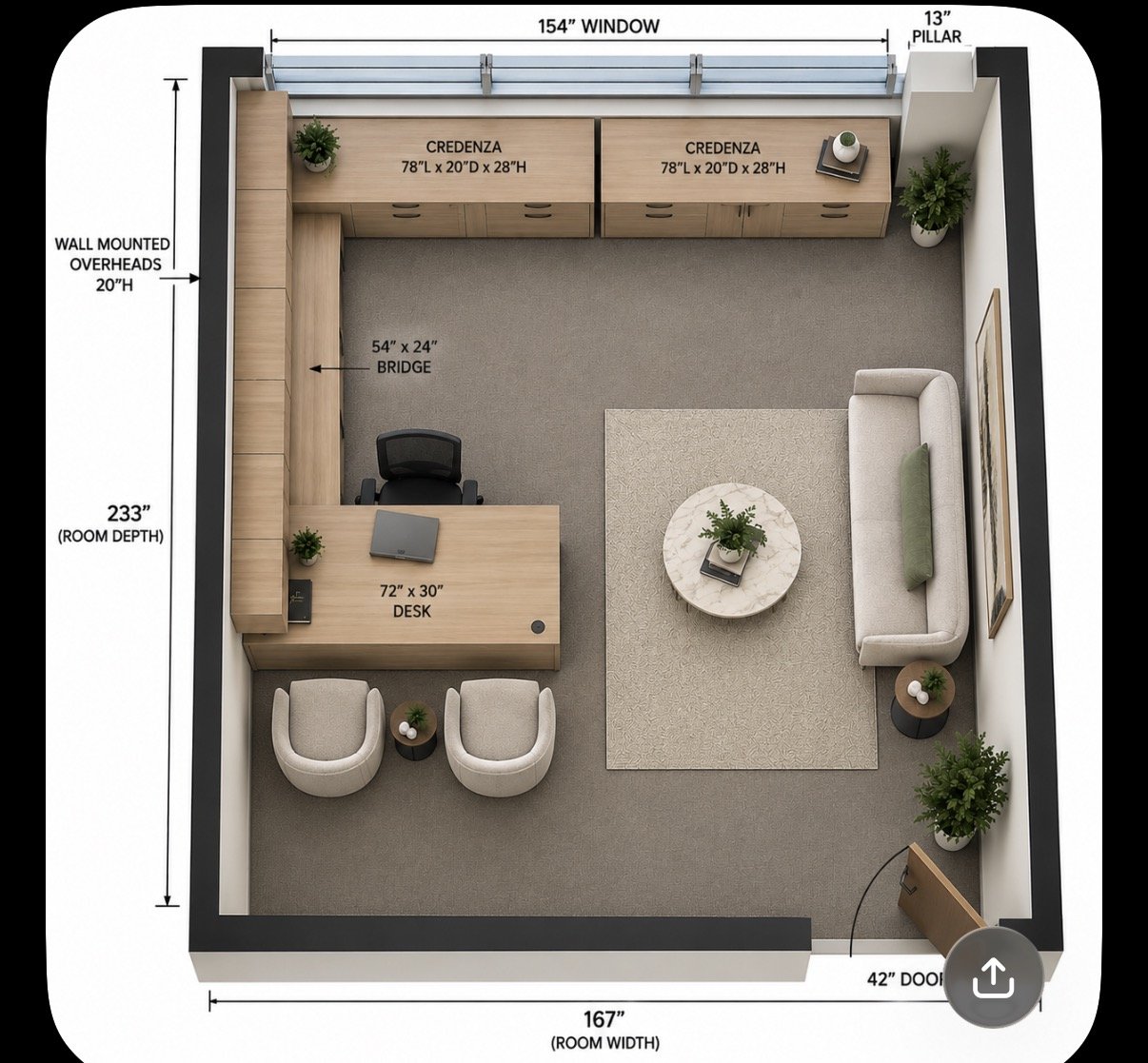
Then examine how planning informs those selections. A layout should guide decisions about furniture placement and the mix of work areas, rather than being treated as a separate drawing. Explore how commercial office space planning services connect workstation choices with the wider floor plan.
Define needs: Record teams, work activities, room types, and functional priorities.
Confirm scope: Identify project areas, responsibilities, decision points, and deliverables.
Assess planning: Check that the layout reflects workplace requirements and informs furniture choices.
Review categories: Match desks, seating, workstations, conference, reception, and storage needs to actual use.
Map execution: Trace approved selections through procurement, delivery, and installation.
Budget fit depends on prioritization, not simply choosing the lowest-cost item. Identify which functions are essential, where flexibility matters, and how selections need to work together across the space. 3S Interior Design tailors commercial furniture selection to client style and budget requirements, connecting those priorities with planning and project delivery.
The Bureau of Labor Statistics provides furniture manufacturing industry statistics for broader sector context; those figures don’t replace project-specific evaluation. For a coordinated assessment of your Burbank workplace, review 3S Interior Design’s commercial furniture and workspace support.
Which Commercial Furniture Categories Fit Your Burbank Workplace?
A workplace rarely has just one furniture need. An office may include enclosed leadership offices, shared team areas, meeting rooms, and a reception zone, each with a different function. The right mix depends on project requirements, available floor area, and budget priorities. A Burbank corporate furniture vendor can connect those needs to suitable commercial categories instead of treating every item as a separate purchase.
Match furniture categories to work activities
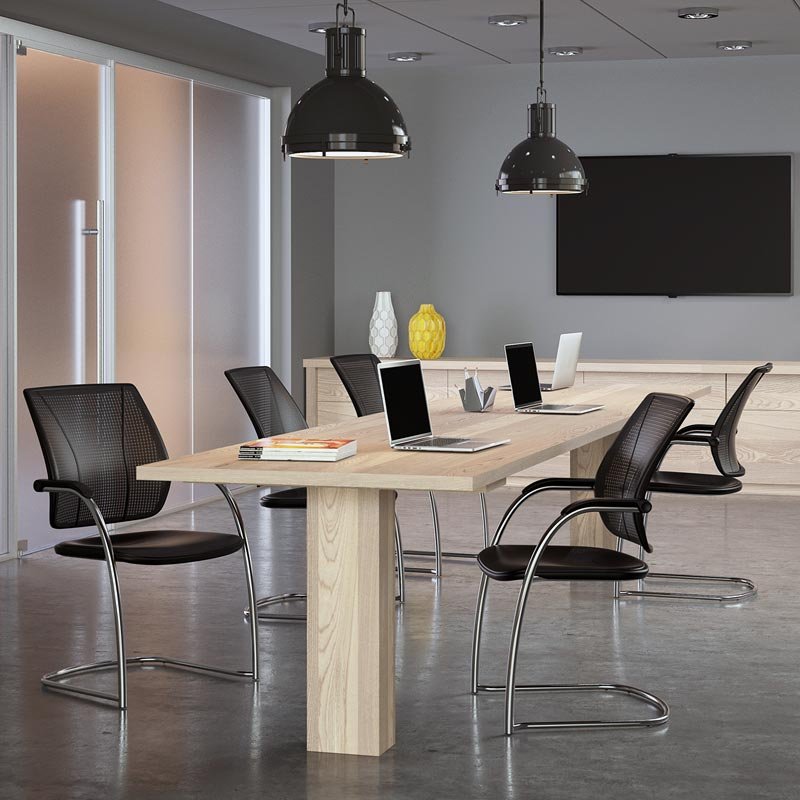
Start with what employees and visitors do in each area. Enclosed offices may call for private office desks and casegoods, while shared work areas may use workstations, cubicles, or open plan and benching systems. Conference, reception, storage, and height-adjustable furniture each serve specific functions. Use the comparison below to identify relevant categories before narrowing selections for the project.
These categories can work together in one project. For example, a Burbank office might combine enclosed offices with a shared workstation area, a conference room, reception furniture, and storage. The combination should reflect actual room functions and priorities, not a checklist that assumes every workplace needs every category.
Coordinate furniture selections with the office layout
Space planning connects category choices to the available floor area. It helps determine which functions belong in each zone and whether the intended furniture mix suits that arrangement. Category selection identifies what the workplace needs; layout design determines how those needs fit the space. Keeping the decisions connected helps prevent selections that don’t account for their planned location.
For example, choosing private office desks and casegoods is only one part of furnishing an enclosed office. The selection needs to suit the room’s role and the overall plan. Explore this guide to private office desks and casegoods for considerations specific to that category.
Before finalizing a furniture mix, group requirements by workplace function, identify which categories support each area, and weigh those choices against the layout and budget. This gives the project a practical basis for selecting commercial furniture that fits both the way the workplace operates and the available space.
Plan Burbank Furniture Procurement, Delivery, and Installation
A furniture plan becomes a completed workplace through a sequence of connected decisions. The scope, chosen categories, and approved layout guide procurement; the procurement plan then informs delivery and professional installation. For a Burbank office, coordinate consultation, space planning, selection, procurement, delivery, and installation as one project sequence, with each stage informed by decisions made earlier.
This approach keeps responsibilities visible across the project. A layout change can affect furniture selection, while a change in categories can affect what needs to be procured and installed. Keeping the scope and decisions aligned helps business stakeholders understand what is being furnished and how the project moves from plan to usable space.
Build a clear procurement and delivery sequence
Begin with agreed workplace requirements and a planned layout. Use those inputs to select furniture categories for the project, then carry approved choices into procurement. Before delivery planning advances, align the items being procured with the project scope and the areas they’re intended to serve. This keeps delivery connected to the plan rather than treating it as a separate transaction.
For a Burbank workplace, delivery is part of the broader Southern California project plan. Keep the selected furniture, planned areas, and project responsibilities consistent as the work moves forward. Maintain a clear record of the agreed scope and decisions that affect the next phase, including any updates to the layout or selected categories.
Confirm the scope: Identify the areas and furniture categories included in the project.
Align the plan: Keep approved selections consistent with the space plan.
Connect procurement to delivery: Track how procured furniture relates to the planned areas and project responsibilities.
Prepare for installation: Carry forward the layout and placement decisions needed to complete the workspace.
Coordinate professional installation with project completion
Installation follows procurement and turns selected furniture into an arranged workplace. The plan guides placement, while the project scope clarifies which areas are included. This transition matters: furniture can be procured without the project being complete, so installation should remain part of the overall delivery plan rather than an afterthought.
Keep the intended layout and furniture categories connected through this stage. Workstations, conference furniture, and reception pieces serve different zones; the agreed plan should show how each category fits into the intended space. A practical office furniture installation checklist can help organize the considerations involved in moving from project planning to placement.
3S Interior Design supports Burbank commercial furniture projects from consultation and space planning through product selection, procurement, delivery, and professional installation. This coordinated service model links planning decisions to project execution. Plan your Burbank furniture project with a connected path from initial requirements through installation.
Work with 3S Interior Design on a Burbank Furniture Project
3S Interior Design provides commercial office furniture and turnkey workspace solutions for businesses in Burbank and across Southern California. The project process connects consultation and space planning with tailored furniture selection, procurement, delivery, and professional installation. This gives decision-makers a coordinated path from defining workplace needs to completing the planned furniture scope.
Furniture categories can be selected to suit the project, including private office desks and casegoods, ergonomic seating, workstations and cubicles, conference room furniture, reception and lobby furniture, storage, and height-adjustable tables. The right combination depends on the layout, workplace functions, style preferences, and budget priorities.
What to prepare for an initial project consultation
A useful consultation starts with a clear picture of how the workplace needs to function. Gather information that connects your goals to the space and the people who use it. Existing plans or other relevant layout information can help inform the discussion, while budget parameters help shape selection priorities. Recommendations are tailored to the project’s requirements and budget.
Workplace goals: Identify what the project needs to support.
Room types: Note the areas included, such as offices, shared workspaces, meeting rooms, or reception.
Team needs: Describe how employees use each area and any priorities that affect furniture choices.
Project priorities: Separate essential requirements from preferences and future flexibility considerations.
Layout information and budget: Share relevant plans and the budget parameters guiding the project.
Move from planning to a coordinated furniture solution
Consultation establishes the project direction. Space planning translates workplace requirements into a layout, and that layout informs furniture selection for the relevant areas. Once selections are tailored to the project, procurement moves the approved choices forward. Delivery and professional installation complete the sequence by bringing the planned furniture into the workplace and arranging it according to the project scope.
This connected approach helps keep decisions aligned as the work progresses. If priorities or layout requirements change, those updates can be considered in relation to furniture selection and the remaining project steps. Rather than managing product choices separately from execution, businesses can work through a coordinated commercial furniture and workspace process with 3S Interior Design.
For a Burbank business evaluating a Burbank corporate furniture vendor, this service model brings planning, product categories, procurement, delivery, and installation into one project path. Discuss your Burbank workplace furniture project with 3S Interior Design.
Set Your Workplace Project in Motion
Turn your workplace priorities into a shared project brief. Align decision-makers on what the space needs to support, which requirements matter most, and how budget priorities will guide choices. That clarity gives a Burbank corporate furniture vendor a useful starting point and keeps project decisions connected to the way your business operates.
Before moving forward, gather the information that will shape planning: your goals, room uses, team needs, and relevant layout details. You don’t need every selection settled in advance. A clear direction makes it easier to develop a furniture plan tailored to your workplace and priorities.
3S Interior Design works with Southern California businesses on commercial furniture and turnkey workspace projects, tailoring selections to project style and budget. Discuss your Burbank workplace furniture project and take the next step toward a coordinated plan for your office.
Frequently Asked Questions
What does a corporate furniture vendor do?
A corporate furniture vendor helps businesses source and coordinate furniture for commercial workplaces. Depending on the project scope, this can include translating operational needs into furniture choices, organizing procurement, and coordinating delivery and installation. For example, a business furnishing a new office may need its team areas, meeting rooms, and reception considered together so purchasing decisions support how the workplace will be used.
How do I choose a corporate furniture vendor in Burbank?
Choose a Burbank corporate furniture vendor by comparing how clearly each proposal connects your needs to its scope and deliverables. Look for a defined furniture plan, understandable responsibilities, and a clear account of how planning relates to selection and execution. A proposal should show what your business must decide and what work the vendor will coordinate, rather than relying on broad assurances.
What furniture should a corporate office procure first?
Prioritize furniture for the areas employees need to use for essential daily work. If teams are moving into a new office, identify the work areas and seating needed for routine operations before allocating attention to secondary spaces. Then consider meeting, reception, and storage needs in relation to how the office will function. The sequence depends on the project’s scope and which workplace activities must be supported first.
How does office space planning help with furniture procurement?
Space planning gives procurement a defined context by showing how rooms and work areas are intended to function. That helps decision-makers assess whether proposed furniture categories suit the available space and the purpose of each area. For example, planning can help determine whether a team zone needs shared workstations or whether the office needs distinct spaces for focused work and meetings, informing selections before purchasing decisions are finalized.
What happens during commercial furniture installation?
Commercial furniture installation puts procured items into their intended workplace areas according to the project plan. The planned layout guides placement, while the agreed scope identifies which areas are included. For a business, installation is the transition from purchasing to an arranged workspace. Reviewing completed placement against the intended room functions helps the team identify any remaining setup decisions.
Can one vendor coordinate planning, procurement, delivery, and installation?
Yes. A single project partner can coordinate these stages as parts of a connected commercial furniture project. 3S Interior Design supports businesses through consultation, space planning, product selection, procurement, delivery, and professional installation. This model keeps project decisions connected: the layout informs furniture selection, and approved selections carry forward into procurement and installation planning.
How should a business compare commercial furniture proposals?
Compare proposals against the same project brief so differences in scope are visible. Check whether each one addresses the same rooms, furniture categories, planning work, procurement responsibilities, delivery, and installation. Note exclusions and unclear handoffs, too. A proposal that presents responsibilities and deliverables clearly is easier to assess against operational priorities and budget than one focused mainly on product images or general descriptions.
Does a Burbank corporate furniture vendor serve only Burbank?
No. 3S Interior Design serves businesses across Southern California, including Los Angeles, Santa Monica, Encino, Burbank, Beverly Hills, Century City, Culver City, Brentwood, Compton, Long Beach, Carson, Thousand Oaks, Westlake Village, Pomona, Irvine, Valencia, and Sherman Oaks. Businesses in these communities can explore commercial furniture and workspace solutions tailored to their project requirements.
Comments