


Selecting Private Office Desks and Casegoods: A Strategic Procurement Guide
Updated: Aug 8
An executive suite is a logistical asset, not just a design project. You likely understand that a fragmented procurement process leads to more than just mismatched wood grains; it creates operational downtime and significant square footage inefficiencies. Selecting high-performance private office desks and casegoods requires a methodical approach that balances brand authority with technical precision. It's about moving beyond aesthetics to ensure every component supports the specific workflow of a modern leader.
This guide provides the framework to master the technical specifications and logistical requirements necessary for executive suites in Southern California. From the dense corridors of Beverly Hills to the corporate hubs of Irvine, managing delivery and installation in busy business districts demands a strategic partner. We'll examine how to coordinate diverse furniture pieces for a cohesive look while maximizing storage efficiency without creating clutter. You'll learn the steps to achieve a turnkey office environment through seamless project management, shifting the focus from simple furniture selection to long-term operational success and professional reliability.
Table of Contents
What are Private Office Desks and Casegoods?
Procuring private office desks and casegoods involves more than selecting a surface for a laptop. In a corporate environment, "casegoods" refers to furniture manufactured from hard materials rather than upholstered fabrics. This category includes desks, credenzas, bookcases, and lateral files. The broader category of Furniture encompasses many types of assets, but casegoods are specifically defined by their box-like construction and storage capabilities. Choosing the right suite is a technical decision that impacts both the daily productivity of an executive and the long-term ROI of the facility budget.
The industry has shifted from selling individual, disparate furniture pieces to providing integrated suite systems. These suites ensure that every component, from the primary work surface to the storage units, fits together with precision. This integration eliminates the logistical risk of mismatched heights or incompatible finishes. For Southern California businesses, where brand image is a competitive differentiator, a cohesive office suite establishes a clear corporate hierarchy. It signals authority and organizational stability to clients and stakeholders alike.
Distinguishing between residential-grade furniture and commercial-grade casegoods is essential for operational success. Residential pieces aren't built for the intensity of a professional setting. Commercial assets are engineered to meet rigorous safety and durability standards, ensuring they won't fail under heavy use. Investing in professional-grade systems protects the organization from the frequent replacement costs associated with lower-quality alternatives. This strategy of maintaining high-value assets is also effective for other wood features; for example, Cabinet refinishing Denver offers professional services to restore and update existing cabinetry, providing a premium look without the need for full replacement.
Core Components of a Private Office Suite
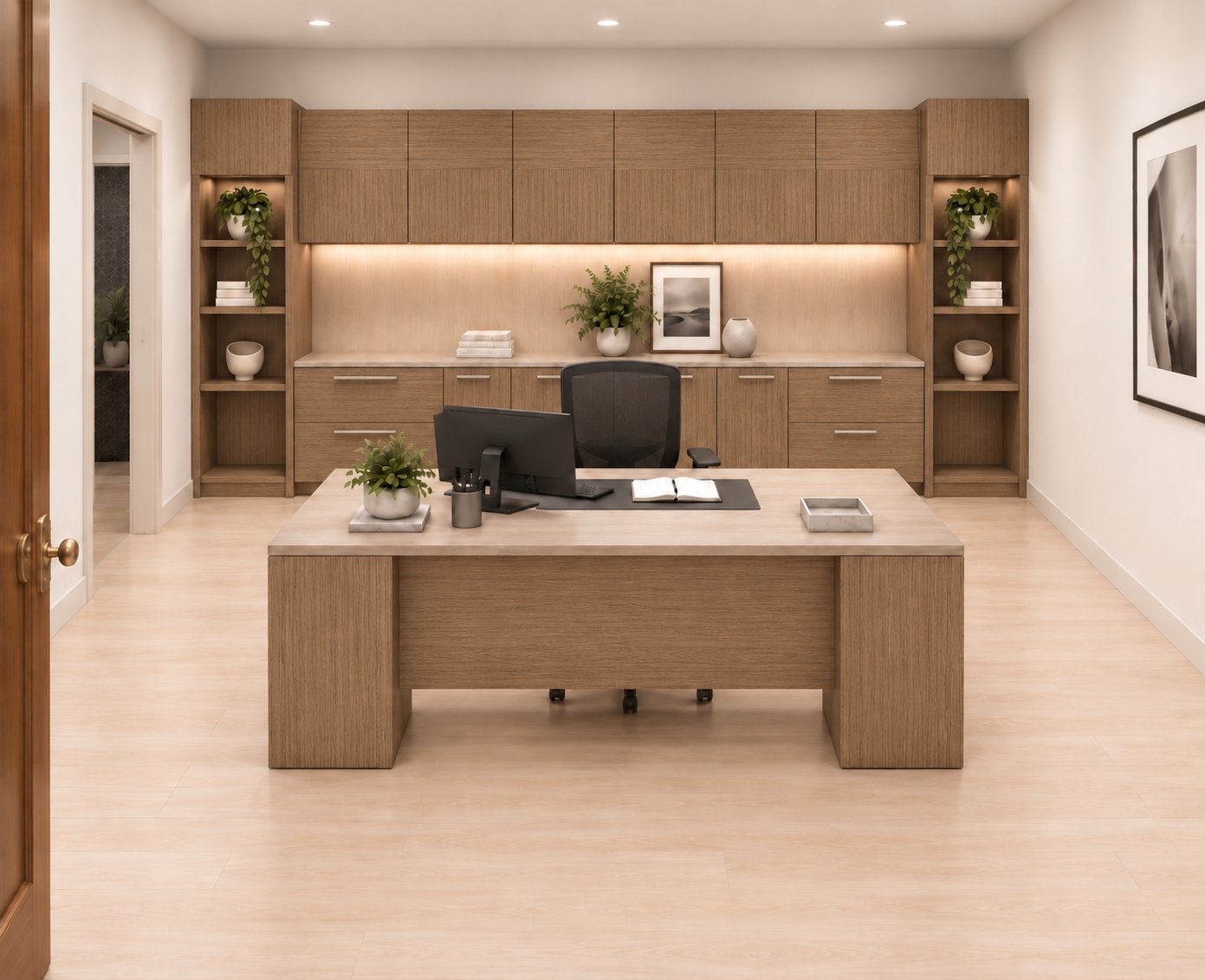
Executive desks act as the anchor of the workspace. They're designed with larger footprints to accommodate meetings and deep-focus work. Credenzas and lateral files provide high-density storage, keeping sensitive documents organized and out of sight. To maximize square footage in high-rent districts like Santa Monica or Beverly Hills, hutches and overhead storage units utilize vertical space. This approach keeps the primary work surface clear while maintaining easy access to essential resources.
Materials and Durability Standards
Material selection depends on the specific application within the office. Wood veneer offers a premium, natural aesthetic that's often preferred for C-suite suites. High-pressure laminate (HPL) provides a more cost-effective and highly durable alternative, resisting scratches and stains in high-traffic areas. Technical details like edge banding are vital; they protect the corners of the furniture from impact damage. Furthermore, commercial units must meet specific weight load capacities to safely support heavy filing systems and multiple monitor arrays without sagging or structural failure.
Evaluating Configurations for Executive Workspaces
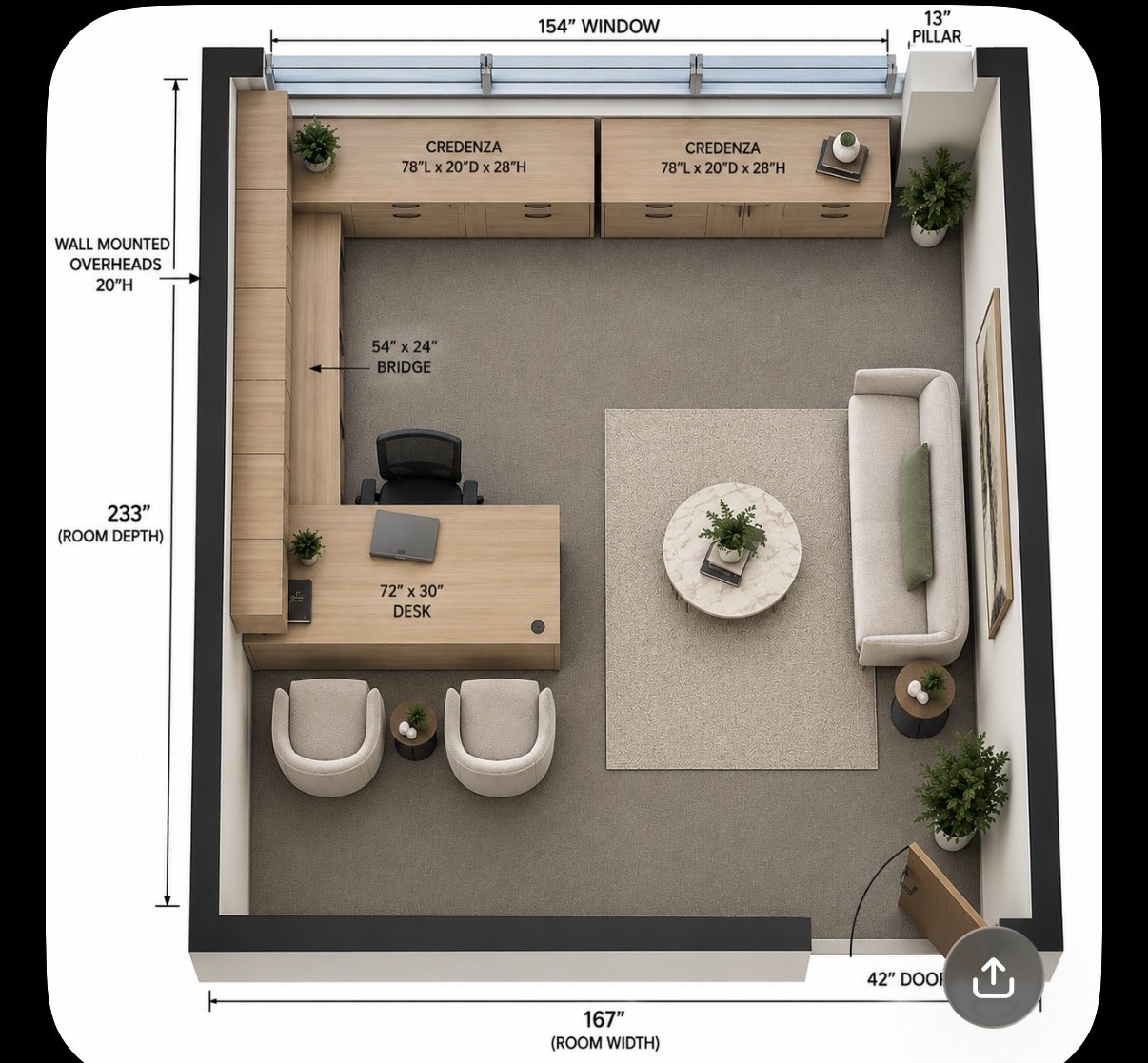
Room dimensions act as the primary technical constraint when selecting private office desks and casegoods. In high-density business districts like Century City, executives often work within fixed architectural footprints that require precise measurements. A methodical evaluation of the floor plan ensures the furniture supports movement rather than restricting it. Workflow also dictates the physical layout. A software executive might prioritize deep surfaces for multiple monitors and integrated power, while a legal professional requires expansive areas for physical document review and high-density filing.
L-Shaped vs. U-Shaped Configurations
L-shaped desks provide a streamlined solution for corner placements. These are particularly effective in smaller Santa Monica suites where floor space is at a premium. The configuration typically consists of a primary desk and a perpendicular return component. Conversely, U-shaped configurations offer the maximum available surface area. By connecting a front desk, a side bridge, and a back credenza, this layout surrounds the user with accessible storage and workspace. This setup is ideal for roles requiring frequent transitions between digital and analog tasks.
Freestanding vs. Built-in Aesthetics
Modern modular casegoods allow organizations to achieve a custom, built-in look without the permanence of architectural millwork. Freestanding desks offer superior flexibility. They can be repositioned to accommodate changing open-door policies or collaborative sessions. Coordinating guest seating with the desk's orientation is a critical step in the space planning process to ensure clear sightlines and professional engagement. This flexibility is a key advantage for growing firms that anticipate internal restructuring.
Technology integration is a non-negotiable requirement for high-performance suites. Quality casegoods feature dedicated wire management channels and discreet power access points. These technical specifications prevent the aesthetic and safety hazards of exposed cabling. Modular systems also provide a long-term advantage. As business needs evolve, these components can be reconfigured or expanded. This adaptability ensures the initial procurement remains a functional asset rather than a sunk cost. It's about building a workspace that responds to the technical demands of the modern executive.
Strategic Storage: Beyond the Standard File Cabinet
Strategic storage transforms the private office from a simple workspace into a command center. High-performance private office desks and casegoods must facilitate active resource management rather than just acting as repositories for paper. This approach prioritizes immediate access to essential tools while maintaining a clutter-free environment that reflects brand authority. In high-stakes business environments, the organization of physical assets is a direct reflection of operational discipline.
Aesthetic choices in storage impact the perceived professionalism of the suite. Hidden storage, such as closed-door credenzas, keeps peripheral equipment like printers and scanners out of sight. This maintains a clean visual line across the office and prevents technical clutter from distracting guests. Conversely, open shelving serves a dual purpose; it provides quick access to reference materials and acts as a platform for brand-building displays. For executives in sensitive industries like finance or law, integrated locking mechanisms on all casegoods ensure document security and regulatory compliance without compromising the suite's design.
Integrated Filing Solutions
Selecting between lateral and vertical filing depends on the available square footage and the volume of physical records. Lateral files offer a wider footprint but can double as additional work surfaces or room dividers. Vertical files are more suitable for tight spaces in high-rent districts like Santa Monica or Irvine. Mobile pedestal drawers provide flexibility for dynamic teams, while fixed units offer a more permanent, integrated look. Safety is a technical priority. Commercial-grade units must include anti-tip mechanisms to prevent accidents when multiple drawers are extended, a standard requirement for professional liability mitigation.
Display and Decorative Casegoods
Bookcases and display towers allow executives to showcase professional achievements and industry literature. These pieces function as brand-building elements that communicate expertise to visitors; for example, insights from Nicholas Wells Antiques on the historical significance of design elements can help leaders curate a space that truly reflects their brand's heritage. For personal organization, wardrobe cabinets provide a dedicated space for outerwear and personal belongings, keeping them separate from professional resources. Additionally, fabric-backed hutches and tackboards serve a technical role by providing acoustic dampening. This reduces sound reverberation in offices with hard surfaces, enhancing privacy during sensitive discussions and improving the overall acoustic quality of the executive environment.
Logistics and Installation in Southern California
Delivering private office desks and casegoods to high-rise environments in Century City or Downtown Los Angeles (DTLA) presents significant logistical challenges. These assets are often heavy and partially assembled, requiring specialized equipment and experienced crews to move through tight corridors and service elevators. Professional installation is mandatory to maintain manufacturer warranties. Most commercial-grade furniture providers will not honor claims for structural failure if the unit was damaged during amateur assembly or improper handling. Local Southern California project management mitigates these risks by providing a single point of contact who understands the regional transportation grid and can bypass common shipping bottlenecks.
The Procurement Lifecycle
The transition from selection to final placement follows a structured three-step process. First, consultation and space planning confirm that the chosen units fit the architectural footprint and electrical access points. Second, the selection phase involves finish coordination to ensure the suite matches existing corporate standards. Finally, coordinated delivery and white-glove installation ensure the furniture is leveled and fully functional before the executive takes occupancy. This methodical approach ensures that the project stays on schedule during a wider office build-out.
Navigating Local Office Building Requirements
Los Angeles commercial buildings enforce strict operational protocols for furniture vendors. Installers must provide a comprehensive Certificate of Insurance (COI) that meets specific property management standards before they are granted site access. Managing freight elevator bookings is also critical; most high-rise towers require these moves to occur during after-hours windows to avoid disrupting daily business operations. A professional team manages these details, including the removal of all packing materials and a final site cleanup. To ensure your project meets these technical standards, you should schedule professional furniture installation services as part of your initial procurement plan.
Timing the installation correctly prevents the furniture from becoming a liability during construction. Casegoods should only be installed after the heavy construction, painting, and flooring phases are complete. This sequence prevents dust contamination and physical damage from other trades. By using a local partner, you gain the advantage of real-time site assessments, allowing the delivery schedule to shift based on the actual progress of the build-out. This level of coordination is what separates a successful turnkey project from a fragmented and delayed furniture delivery.
The 3S Advantage: Turnkey Private Office Solutions
3S Interior Design functions as a strategic partner that manages the entire procurement lifecycle for private office desks and casegoods. We provide a complete, end-to-end service model that removes the logistical burden from facility managers and executives. Our methodology focuses on operational efficiency and the mitigation of professional risk. By acting as a single point of accountability, we ensure that every phase of the project aligns with the functional requirements of a high-performance workplace. We don't just sell furniture; we deliver a fully operational executive environment.
Our manufacturer-agnostic approach provides a significant competitive advantage. Many providers lock clients into a specific brand's catalog, which can limit options and inflate costs. We curate selections from a wide range of commercial-grade manufacturers to meet specific budget targets and aesthetic requirements. This flexibility allows us to scale our services effectively. Whether you're establishing a single flagship executive office in Beverly Hills or outfitting an entire corporate floor in Irvine, our team maintains the same level of technical precision and logistical reliability.
Comprehensive Space Planning Services
Strategic space planning is the foundation of a successful office build-out. We utilize advanced 2D and 3D layouts to help stakeholders visualize the final configuration before any procurement occurs. This technical visualization ensures that every piece of furniture fits perfectly within the architectural footprint. Our planning process also addresses critical regulatory requirements, such as ADA compliance and proper egress paths within private suites. We can also coordinate the integration of existing furniture with new casegoods, ensuring a cohesive brand image while maximizing the value of your current assets.
Expert Installation Across Southern California
Professional installation is essential for protecting your investment and ensuring long-term operational stability. Our crews possess extensive local expertise in navigating the specific requirements of Los Angeles, Santa Monica, and Orange County business hubs. We manage every detail, from freight elevator coordination to after-hours delivery schedules. This level of organization reduces corporate downtime and ensures that furniture assembly meets all safety and durability standards. To begin your workspace transformation, Schedule a Consultation with 3S Interior Design and see how methodical planning maximizes your real estate investment.
Optimizing Your Executive Workspace Investment
Strategic procurement of private office desks and casegoods ensures that your workspace functions as a high-performance asset. You've seen how precise configuration and integrated storage management directly impact executive productivity. Managing the complexities of high-rise logistics in Los Angeles and Orange County requires more than just a furniture vendor; it demands a strategic partner. Success in these environments depends on the technical coordination of delivery schedules, building insurance requirements, and manufacturer-certified installation.
3S Interior Design provides full-service project management from initial space planning to final white-glove installation. Our team specializes in the technical requirements of commercial building logistics, ensuring your project remains on schedule and compliant with local property standards. We eliminate the operational risks associated with fragmented delivery and assembly processes. By leveraging manufacturer-agnostic planning, you can achieve a turnkey environment that reflects your brand's authority while staying within budget.
We invite you to Request a Turnkey Workspace Consultation to discuss your specific square footage and functional goals. Building a sophisticated, efficient private office is a methodical process, and we are ready to guide your organization through every phase of the transition.
Frequently Asked Questions
What is the difference between a desk and casegoods?
Casegoods is a broad industry term for non-upholstered furniture that provides storage and work surfaces. While a desk is a specific component, the casegoods category includes credenzas, lateral files, and bookcases. These pieces are designed with a box-like construction to ensure structural stability and high-density storage. In professional procurement, these items are often grouped as integrated suites to maintain a consistent finish and technical compatibility across the office suite.
How much space do I need for a U-shaped executive desk?
A U-shaped executive desk typically requires a minimum room footprint of 100 square feet to maintain professional egress and user comfort. The configuration itself often measures approximately 6 feet by 9 feet. You must also account for a 36-inch clearance behind the desk for chair movement and an additional 30 to 48 inches in front for guest seating. Precise space planning is necessary to ensure the unit doesn't obstruct doorways or HVAC vents.
Can modern office casegoods be customized for tech integration?
Modern private office desks and casegoods are specifically engineered to support advanced technology integration. Manufacturers include discreet cable management channels, flip-top power modules, and grommet holes to prevent wire clutter. Higher-end suites can be customized with built-in wireless charging surfaces and ventilated CPU storage. These technical specifications allow executives to maintain a clean, professional aesthetic while supporting multiple monitors and high-speed data connections without visible cabling.
How long does it typically take to deliver and install private office furniture in Los Angeles?
Lead times for commercial office furniture in Southern California generally range from 2 to 16 weeks depending on the manufacturer's location and stock status. As of 2026, custom casegoods often average 8 to 12 weeks for production and transit. Local project management can expedite the process for in-stock items, which are sometimes available for delivery within 24 to 48 hours. Coordinating with building management for freight elevator access is a critical step in the timeline.
What are the best materials for high-traffic executive desks?
High-pressure laminate (HPL) is the most durable material for high-traffic executive desks due to its resistance to scratches, heat, and stains. It's an ideal choice for operational roles where the surface sees constant use. For C-suite suites where brand image is the priority, wood veneer offers a premium aesthetic. Veneer requires more maintenance but provides a natural finish that reflects corporate authority. Both materials should feature impact-resistant edge banding to prevent corner damage.
Do I need professional installation for commercial office desks?
Professional installation is mandatory for commercial-grade furniture to ensure structural integrity and maintain manufacturer warranties. Heavy casegoods require precise leveling to prevent drawer misalignment and structural stress over time. Professional crews also manage the logistical requirements of high-rise buildings, including insurance documentation and debris removal. Attempting amateur assembly often results in voided warranties and potential safety hazards in a corporate environment that demands high performance and reliability.
Are these desks compatible with height-adjustable bases?
Many modern casegoods collections are specifically designed for compatibility with height-adjustable bases. You can integrate a sit-stand mechanism into a standard L-shaped or U-shaped layout without disrupting the cohesive look of the suite. These systems allow the primary work surface to move independently while the surrounding storage components remain stationary. This integration supports employee wellness standards while maintaining the formal appearance and functional storage capacity of a traditional executive office environment.
Comments